
Cookware Materials Explained: Your Complete Guide
Choosing the right cookware can change how you cook. Each material heats differently. Some need more care than others. Let’s explore what makes each type special.
Why Cookware Material Matters
The material of your pots and pans affects three key things. First, how evenly they heat your food. Second, how long they last. Third, how much work they need to maintain.
Good cookware makes cooking easier. The wrong material can burn your food or warp over time. Understanding each option helps you make smart choices.
Stainless Steel: The Professional’s Choice
Stainless steel dominates professional kitchens. This material combines iron with chromium and nickel. The mix creates a hard, non-reactive surface.
Benefits:
- Lasts for decades with proper care
- Works on all cooktops including induction
- Goes from stovetop to oven safely
- Doesn’t react with acidic foods like tomatoes
- Develops fond for making sauces
Drawbacks:
- Food sticks without enough fat or heat
- Heats unevenly without an aluminum core
- Shows stains and water spots
- Costs more than basic options
Many stainless steel pans have aluminum or copper cores. These layers spread heat evenly across the cooking surface.
Cast Iron: Traditional and Durable
Cast iron has served cooks for centuries. Molten iron pours into molds to create thick, heavy pans. These pieces retain heat better than any other material.
Benefits:
- Lasts multiple generations
- Gets better with use as seasoning builds
- Goes from stove to oven to campfire
- Adds small amounts of iron to food
- Creates excellent sears on meat
Drawbacks:
- Very heavy to lift and move
- Heats slowly but stays hot
- Needs seasoning to prevent rust
- Reacts with acidic foods when new
- Can crack if dropped
Season cast iron by coating it with oil and heating it. This creates a natural nonstick layer. Never use soap on well-seasoned cast iron.
Nonstick Coatings: Easy Cooking and Cleaning
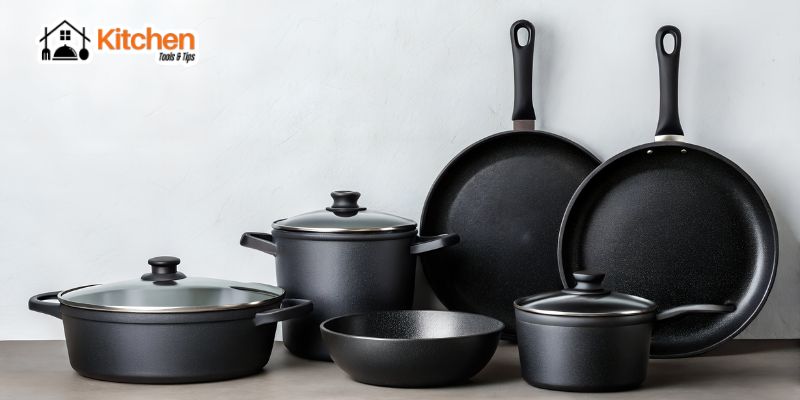
Nonstick pans have special coatings that repel food. PTFE (often called Teflon) is the most common type. These pans need less oil for cooking.
Benefits:
- Food slides right off the surface
- Uses minimal oil or butter
- Cleans up quickly with just water
- Perfect for eggs and delicate fish
- Lightweight and easy to handle
Drawbacks:
- Coatings wear out over time
- Cannot handle high heat safely
- Metal utensils scratch the surface
- Not oven-safe above certain temperatures
- Needs replacement every few years
Never heat empty nonstick pans. Always use low to medium heat. Replace pans when the coating chips or peels.
Aluminum: Lightweight and Affordable
Pure aluminum heats quickly and evenly. This soft metal costs less than most options. However, it reacts with acidic and alkaline foods.
Benefits:
- Heats up fast
- Weighs very little
- Costs less than premium materials
- Conducts heat extremely well
- Great for everyday cooking
Drawbacks:
- Dents and scratches easily
- Reacts with tomatoes and citrus
- Discolors over time
- Not dishwasher safe
- Cannot use on induction cooktops
Anodized aluminum solves many problems. An electrical process hardens the surface. This makes it non-reactive and more durable.
Copper: Premium Heat Control
Copper offers the best heat conductivity of any cookware material. Professional chefs prize it for precise temperature control. The beautiful appearance also enhances any kitchen.
Benefits:
- Responds instantly to heat changes
- Distributes heat perfectly
- Looks stunning on display
- Lasts for generations with care
- Ideal for delicate sauces
Drawbacks:
- Very expensive to buy
- Requires regular polishing
- Needs tin or stainless lining
- Heavy to handle
- Tarnishes without care
Most copper cookware has stainless steel interiors. Pure copper reacts with food. The lining prevents this problem.
Carbon Steel: The Versatile Option
Carbon steel resembles cast iron but weighs much less. French and Chinese cooks have used it for centuries. It combines the best traits of cast iron and stainless steel.
Benefits:
- Lighter than cast iron
- Develops natural nonstick patina
- Handles very high heat
- Works on any cooktop
- More affordable than stainless
Drawbacks:
- Requires seasoning like cast iron
- Rusts without proper care
- Reacts with acidic foods initially
- Discolors with use
- Needs regular maintenance
Carbon steel woks are traditional for stir-frying. The material heats fast and tolerates extreme temperatures. Season it just like cast iron.
Ceramic: Natural Nonstick Alternative
Ceramic cookware has clay-based nonstick coatings. Some pieces are pure ceramic. Others have ceramic coatings on metal. This offers a PTFE-free option.
Benefits:
- Free from PTFE and PFOA chemicals
- Naturally nonstick when new
- Looks attractive in bright colors
- Safe at higher temperatures
- Easy to clean initially
Drawbacks:
- Nonstick properties fade quickly
- Chips and cracks more easily
- Cannot handle thermal shock
- Shorter lifespan than other materials
- Performance declines over time
Ceramic coatings last one to two years with careful use. Avoid high heat and metal utensils. Hand wash for best results.
How to Choose Your Cookware
Consider these factors when selecting cookware:
Your cooking style: Do you sear steaks or make delicate sauces?
Maintenance willingness: Some materials need regular care.
Budget available: Quality pieces cost more upfront but last longer.
Cooktop type: Induction requires magnetic materials.
Storage space: Heavy items need sturdy shelves.
Start with versatile pieces. Get a stainless steel skillet and a nonstick pan. Add cast iron for high-heat cooking. Build your collection based on what you cook most.
Frequently Asked Questions
What is the safest cookware material?
Stainless steel and cast iron are the safest options. They contain no chemical coatings. Both materials are completely inert and non-toxic when properly used.
Which material heats most evenly?
Copper provides the most even heating. Aluminum comes in second. Stainless steel needs an aluminum or copper core to heat evenly.
How long does nonstick cookware last?
Quality nonstick pans last three to five years. Cheap versions wear out in one to two years. Proper care extends their lifespan.
Can I use metal utensils on stainless steel?
Yes, metal utensils are safe on stainless steel. The material resists scratching. However, sharp utensils can leave marks over time.
Why does food stick to stainless steel?
Food sticks when the pan is too cold or too hot. Preheat properly and use enough fat. Let proteins form a crust before flipping them.
Is cast iron really healthier?
Cast iron adds small amounts of dietary iron to food. This benefits people with iron deficiency. However, it’s not a primary iron source.