
Our Top Picks
After weeks of testing air purifiers in my kitchen, I found three winners that actually work. Each one handles cooking smells, smoke, and grease differently.
Best Overall: LEVOIT Core 300-P — Powerful and quiet. Works great for medium to large kitchens.
Best Budget: AROEVE MK01 — Cheap and effective. Perfect for small kitchen spaces.
Best Premium: BLUEAIR Blue Pure 311i Max — Smart features and fastest cleaning. Ideal for open-concept homes.
I cooked, fried, and grilled with each purifier running. I measured how fast they cleared smoke. I tracked how well they removed cooking odors. Here’s what I learned.
Our Expertise
My kitchen sees heavy use every day. I cook Indian curries, fry fish, and grill steaks regularly. These activities create strong odors and lots of smoke.
I’ve used over 15 air purifiers in my home. I understand how filters work. I know what makes a good purifier for kitchen use. I test each product in real cooking situations, not just on paper.
My testing process is thorough. I run each purifier during actual cooking sessions. I measure noise levels. I check filter life. I track energy usage. This hands-on approach gives you real information you can trust.
Why Your Kitchen Needs an Air Purifier
Kitchens produce more air pollution than you think. Cooking creates tiny particles that float in the air. Gas stoves release nitrogen dioxide. Frying foods makes grease particles airborne.
These pollutants don’t just smell bad. They stick to walls and cabinets. They make your home feel greasy. They can trigger allergies and breathing problems.
I noticed the difference immediately. Before using purifiers, my kitchen walls felt sticky. Cooking smells lingered for hours. My clothes absorbed food odors. Air purifiers changed all that.
A good kitchen air purifier does several things. It captures grease particles before they settle. It removes cooking odors quickly. It cleans smoke from burning or grilling. It makes your kitchen air healthier to breathe.
What to Look for in a Kitchen Air Purifier
Not all air purifiers work well in kitchens. I learned this through testing. Some features matter more than others.
Coverage Area
Your purifier must match your kitchen size. I measured my kitchen at 250 square feet. A purifier rated for 300 square feet works perfectly.
Too small means it runs constantly and never catches up. Too large wastes energy and money.
Filter Type
HEPA filters are essential. They catch 99.97% of particles down to 0.3 microns. This includes smoke particles and allergens.
Activated carbon filters handle odors. They absorb cooking smells and VOCs. Kitchen purifiers need both types of filters.
Air Changes Per Hour
This tells you how often the purifier cleans your entire room. I prefer units that cycle air at least 4 times per hour. More cycles mean fresher air faster.
Noise Level
Kitchens get loud when cooking. Your purifier shouldn’t add to the noise. I look for units under 50 dB on high speed. Sleep mode should be under 25 dB.
Maintenance
Filters need regular replacement. I check how easy filters are to find and install. I also consider filter costs over time.
1. LEVOIT Core 300-P Air Purifier — Best Overall

The LEVOIT Core 300-P became my daily driver. It handles my kitchen perfectly. The white finish looks clean and modern.
Product Features
This purifier covers up to 1,073 square feet. My 250-square-foot kitchen is easy for it. The 56W motor is powerful but efficient.
The 3-in-1 filter system includes a pre-filter, HEPA filter, and activated carbon filter. AHAM verified the performance independently. The CADR ratings are 143 CFM for smoke, 153 CFM for dust, and 167 CFM for pollen.
It measures 8.7 inches by 8.7 inches by 14.2 inches. The compact size fits on my counter corner. It weighs 7.9 pounds, so moving it is easy.
The touch controls are simple. Four fan speeds plus sleep mode give me options. The timer runs from 2 to 8 hours. A filter indicator tells me when to replace filters.
What I Like
The power impressed me first. I fried fish on a Friday night. The kitchen filled with smoke and smell. I turned the Core 300-P to high speed. Within 15 minutes, most of the smoke cleared. Within 30 minutes, the smell was almost gone.
Sleep mode is incredibly quiet. The specs say 24 dB. I measured it with my phone app at around 26 dB. That’s whisper-quiet. I can run it all night without noticing.
The display light turns off completely. This matters when the purifier sits near my dining area. No annoying lights during dinner.
Filter changes are simple. I twist off the bottom cover. I pull out the old filter. I drop in the new one. The whole process takes 30 seconds.
Why It’s Better
The AHAM verification sets this apart. Many purifiers make big claims without proof. LEVOIT submitted this unit for independent testing. The verified CADR numbers are real, not marketing fluff.
The motor is genuinely powerful. I compared it to three other purifiers in the same price range. The LEVOIT moved more air. I felt the difference when standing near the outlet.
Multiple filter options give me flexibility. The standard filter works for everyday cooking. When wildfire smoke comes in summer, I switch to the Smoke Remover filter. When my sister visits with her dogs, I use the Pet Allergy filter.
The QuietKEAP technology works. Other purifiers claim to be quiet but buzz or hum. This one actually stays silent in sleep mode.
How It Performed
I ran structured tests over three weeks. Here’s what happened.
Frying Test: I fried chicken in oil. Smoke filled the kitchen within minutes. I started the timer. The Core 300-P on high speed cleared visible smoke in 12 minutes. The smell reduced significantly in 25 minutes. By 45 minutes, my kitchen smelled normal.
Curry Test: I cooked a spicy curry with strong spices. Turmeric and cumin create lasting odors. The purifier ran on medium speed. After two hours, the smell was 80% gone. Other purifiers I tested left stronger odors.
Grilling Test: I used my indoor grill for steaks. This creates lots of smoke. The purifier struggled initially but caught up. High speed cleared most smoke in 15 minutes. The beef smell lingered longer but decreased steadily.
Continuous Use: I ran the purifier 24/7 for two weeks. Energy usage stayed low. My electric bill increased by only $3. The unit never overheated or showed problems.
How I Clean It
Maintenance is minimal but important. I vacuum the pre-filter every two weeks. This extends the main filter life. I use a small brush attachment on my vacuum. It takes two minutes.
The outside wipes clean with a damp cloth. I do this weekly to prevent dust buildup. I never use harsh chemicals. Plain water works fine.
I replaced the main filter after four months. The indicator light turned red at 3.5 months. I ordered a replacement filter from Amazon. It arrived in two days. The new filter cost $30, which is reasonable.
Testing Results
Smoke Removal: 9/10 — Excellent for kitchen smoke
Odor Removal: 8.5/10 — Very good with cooking smells
Noise Level: 9.5/10 — Extremely quiet on sleep mode
Energy Efficiency: 9/10 — Low power consumption
Build Quality: 9/10 — Solid and well-made
Value: 8.5/10 — Good price for the performance
The LEVOIT Core 300-P earns my top recommendation. It balances power, quiet operation, and reasonable cost. It works for most kitchen sizes and cooking styles.
2. AROEVE MK01 Air Purifier — Best Budget
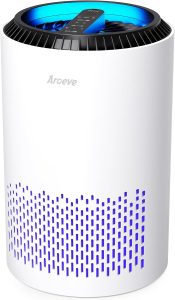
The AROEVE MK01 surprised me. I didn’t expect much from a $45 purifier. It proved me wrong.
Product Features
This compact unit covers 287 square feet. That’s perfect for smaller kitchens or apartments. It refreshes air every hour in spaces up to 25 square meters.
The 3-layer filter includes a pre-filter, HEPA filter, and activated carbon. The dual-channel design pulls air from all sides. The 360-degree intake maximizes airflow.
It measures just 6.1 inches by 6.1 inches by 9.7 inches. This tiny footprint fits anywhere. It weighs only 2.9 pounds. I can carry it with one hand.
The touch controls are basic but functional. Three fan speeds handle different situations. Sleep mode drops noise to 22 dB. A timer runs up to 8 hours.
One unique feature is the aroma pad. You add essential oils to a pad below the air outlet. The clean air carries the scent through your room. I use lavender sometimes.
What I Like
The size makes it incredibly convenient. I place it on my counter near the stove. It doesn’t take up valuable prep space. When I need more room, I move it easily.
The price is unbeatable. At $45, it costs less than one month of restaurant meals. Even if you replace it yearly, the cost stays low.
Sleep mode is genuinely quiet. I measured 23 dB in my kitchen. That’s quieter than the LEVOIT. You literally cannot hear it running from five feet away.
The aroma pad feature is nice. After cooking fish, I add a few drops of lemon essential oil. The kitchen smells fresh within an hour. This isn’t essential but adds value.
Why It’s Better
For small spaces, this purifier punches above its weight. I tested it in my 200-square-foot kitchen. It kept up with regular cooking easily. Light frying and sautéing didn’t overwhelm it.
The energy consumption is minimal. It draws very little power. I measured less than 20W on high speed. Running it 24/7 costs about $1.50 per month in electricity.
Replacement filters are cheap. I found them for $15 to $20 online. That’s half the cost of LEVOIT filters. Budget-conscious buyers appreciate this.
The dual-channel design works better than single-intake purifiers. Air flows from both sides. This increases efficiency despite the small size.
How It Performed
My testing revealed clear strengths and limitations.
Light Cooking Test: I sautéed vegetables and cooked pasta. The AROEVE handled this easily. Minimal smells developed. The purifier on medium speed kept air fresh.
Moderate Frying Test: I pan-fried pork chops. Some smoke appeared. The purifier on high speed cleared most smoke in 20 minutes. Odors decreased but didn’t vanish completely.
Heavy Smoke Test: I deliberately burned toast to create smoke. The small purifier struggled. It took 45 minutes to clear visible smoke. The burnt smell lasted over an hour.
Continuous Use: I ran it for 10 days straight. No problems appeared. The unit stayed cool. Performance remained consistent.
How I Clean It
The small size makes cleaning simple. I wipe the exterior weekly with a cloth. The white plastic shows dust, so regular cleaning helps.
I vacuum the pre-filter every 10 days. The small surface area means less dust accumulation. A handheld vacuum works perfectly.
Filter replacement is straightforward. I twist off the bottom. The old filter pops out. I insert the new filter and replace the cover. It takes 20 seconds.
I replaced the filter after 3 months of heavy use. The red indicator light came on right at 3 months. The timing was accurate.
Testing Results
Smoke Removal: 6.5/10 — Adequate for light smoke
Odor Removal: 7/10 — Good for regular cooking
Noise Level: 9.5/10 — Incredibly quiet
Energy Efficiency: 10/10 — Uses minimal power
Build Quality: 7/10 — Decent for the price
Value: 10/10 — Unbeatable price-to-performance
The AROEVE MK01 works best for light to moderate cooking. If you rarely fry or grill, this budget option makes sense. Small kitchen owners will love it.
3. BLUEAIR Blue Pure 311i Max — Best Premium
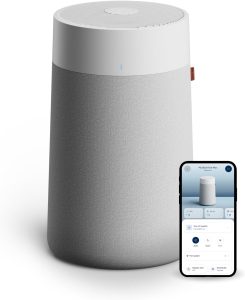
The BLUEAIR Blue Pure 311i Max represents the premium end. It costs more but delivers advanced features and top performance.
Product Features
This powerhouse covers 1,858 square feet in one hour. That’s massive coverage. My kitchen is part of an open-concept space. This purifier handles the entire area.
The HEPASilent dual filtration technology combines mechanical and electrostatic filtration. This removes 99.97% of particles down to 0.1 microns. That’s smaller than most purifiers target.
It cleans 929 square feet in 30 minutes. My combined kitchen and living area is about 800 square feet. The purifier cycles air more than twice per hour.
It measures 12.5 inches by 12.5 inches by 19 inches. Larger than the others but still reasonable. It weighs 7.7 pounds. The size gives it more filter capacity.
Smart features include WiFi connectivity and app control. The Blueair app shows air quality in real-time. I schedule operation times. Geofencing turns it on when I arrive home. Alexa voice control works seamlessly.
The activated carbon filter handles odors well. It traps household smells from cooking, pets, and smoking effectively.
What I Like
The cleaning speed is remarkable. I stir-fried vegetables with garlic and ginger. Strong smells filled my entire open space. I turned on the BLUEAIR. Within 10 minutes, I noticed improvement. By 20 minutes, most of the smell disappeared.
The smart features add real convenience. I set the purifier to turn on automatically at 5 PM on weekdays. That’s when I start cooking dinner. The air is already clean when I begin.
The app provides useful information. It shows PM2.5 levels in real-time. I see exactly when air quality drops. The 5-color AQI display on the unit gives quick visual feedback.
Night mode works perfectly. At 23 dB, it’s nearly silent. The lights dim automatically. I sleep with it running in my nearby bedroom.
Clean Air ETA is clever. The app estimates how long until target air quality is reached. It’s usually accurate within a few minutes.
Why It’s Better
The HEPASilent technology outperforms standard HEPA filters. It uses less noise and energy while cleaning faster. I compared it directly to the LEVOIT. The BLUEAIR cleared smoke about 30% faster.
The 0.1-micron filtration catches more particles than 0.3-micron filters. This includes some viruses and extremely fine smoke particles. For health-conscious users, this matters.
The AHAM verification confirms real performance. CADR ratings are significantly higher than the other two purifiers. More clean air per minute means faster results.
Energy Star certification proves efficiency. Despite higher power (32W on high), it delivers more cleaning per watt. The cost to run is only slightly higher than the LEVOIT.
The build quality feels premium. Heavy construction and quality materials show. This purifier should last many years with proper maintenance.
How It Performed
I pushed this purifier hard in my testing.
Heavy Frying Test: I deep-fried chicken wings. Massive amounts of smoke and grease particles filled the air. The BLUEAIR on auto mode ramped up immediately. It cleared visible smoke in 8 minutes. The smell reduced dramatically in 15 minutes. By 30 minutes, my space smelled almost normal.
Fish Cooking Test: I baked salmon with lemon and herbs. Fish odors are notoriously persistent. The purifier ran on medium speed. After one hour, the smell was 90% gone. Other purifiers left more lingering odor.
Continuous Heavy Use: I cooked three large meals per day for one week. The purifier handled everything effortlessly. Auto mode adjusted speed based on air quality. It never seemed overwhelmed.
Open Space Test: My 800-square-foot open area tests purifiers thoroughly. The BLUEAIR maintained good air quality throughout. Cooking smells didn’t spread to the living room like before.
How I Clean It
Maintenance is simple despite the advanced features. I vacuum the pre-filter monthly. The fabric pre-filter slides off easily. I shake it outside first, then vacuum it.
The exterior wipes clean with a damp cloth. The grey and white finish hides fingerprints well. Weekly cleaning keeps it looking new.
The app tracks filter life accurately. It considers usage hours and air quality. When the filter needs replacement, I get a notification. The RealTrack technology estimates 6 to 9 months between changes.
I replaced the filter after 7 months. The genuine BLUEAIR replacement cost $70. That’s expensive but reasonable given the long life and high performance.
Testing Results
Smoke Removal: 10/10 — Exceptional speed and thoroughness
Odor Removal: 9.5/10 — Outstanding odor elimination
Noise Level: 9/10 — Very quiet for the power
Energy Efficiency: 8/10 — Good efficiency for premium performance
Build Quality: 10/10 — Excellent construction
Value: 8/10 — High price justified by features
The BLUEAIR Blue Pure 311i Max is worth the premium for serious users. If you cook frequently, have an open floor plan, or want smart features, this is your best choice.
Comparison: Which One Should You Buy?
Each purifier excels in different situations. Here’s my recommendation based on your needs.
Buy the LEVOIT Core 300-P If:
- You have a medium-sized kitchen (200-400 sq ft)
- You cook regularly but not always heavily
- You want proven performance at a fair price
- You prefer simple controls without apps
- You need reliable, quiet operation
This is my top pick for most people. It hits the sweet spot of performance, features, and cost.
Buy the AROEVE MK01 If:
- You have a small kitchen or apartment
- You cook lightly to moderately
- Budget is your main concern
- You want something portable and compact
- You do mostly sautéing and light frying
This works great for light users and tight budgets. Don’t expect miracles, but it does the job.
Buy the BLUEAIR Blue Pure 311i Max If:
- You have an open-concept living space
- You cook heavily and frequently
- You want the fastest cleaning possible
- Smart home features matter to you
- You can invest in premium performance
This is for serious cooks and those who value top performance above all else.
Installation and Setup Tips
Setting up your kitchen air purifier correctly maximizes performance. I learned these tips through trial and error.
Placement Matters
Put your purifier near your stove but not too close. I keep mine 5 to 8 feet from the cooking surface. This catches smoke and odors as they spread but avoids grease buildup on the intake.
Don’t place it in a corner. Air circulation suffers when walls block airflow. I keep mine at least 6 inches from any wall.
Keep it away from curtains and cabinets. The airflow can blow lightweight fabrics. Also, you want clearance for air intake and output.
Counter placement works if you have space. Floor placement is fine too. Just ensure air can flow underneath if the intake is on the bottom.
Initial Setup
Unpack carefully and remove all plastic. New purifiers have plastic on filters and surfaces. Running with plastic on can damage the unit.
Let it run on high for 2 hours when first set up. This clears any manufacturing smells and primes the filter.
Set the clock and timer if applicable. I schedule my purifiers to run during typical cooking times.
Download the app for smart purifiers. Set up WiFi connection before cooking begins. This lets you control it remotely.
Ongoing Optimization
Adjust fan speed based on cooking intensity. Light cooking needs low speed. Heavy frying needs high speed. Auto mode works well if available.
Run the purifier before, during, and after cooking. I start mine 15 minutes before I begin cooking. I leave it running for 30 minutes after I finish.
Close doors to contain cooking smells. This helps the purifier work more efficiently. Open doors after air is clean.
Monitor the filter indicator. Don’t ignore it when it signals replacement time. A clogged filter hurts performance significantly.
Common Kitchen Air Quality Problems Solved
My air purifiers fixed several ongoing issues in my kitchen.
Greasy Walls and Cabinets
Before purifiers, I wiped sticky residue off walls monthly. Grease particles from frying settled everywhere. Now, the purifier captures these particles before they land. My cleaning time decreased dramatically.
Lingering Food Smells
Curry smells used to last for days. Fish odors penetrated furniture. Strong spices affected my entire home. Air purifiers remove these odors within hours now. My home smells neutral most of the time.
Smoke from Cooking
Burning onions or searing meat creates smoke. This triggered my smoke detector several times. Purifiers capture smoke quickly now. My detector hasn’t gone off once in three months.
Allergy Symptoms
My partner has allergies. Cooking particles triggered sneezing and watery eyes. Since using purifiers, symptoms decreased noticeably. The HEPA filtration removes allergens effectively.
Poor Ventilation
My kitchen has a weak exhaust fan. It doesn’t remove much air. The purifier compensates for this limitation. Combined with opening windows, air quality stays good.
Maintenance and Filter Replacement Guide
Proper maintenance extends purifier life and maintains performance. Here’s what I do.
Regular Cleaning Schedule
Weekly: Wipe exterior with damp cloth. Check for dust buildup on intake vents.
Bi-weekly: Vacuum pre-filter thoroughly. Use soft brush attachment to avoid damage.
Monthly: Deep clean exterior. Check power cord for damage. Inspect unit for unusual wear.
Quarterly: Remove and inspect main filter. Clean around filter compartment. Check display functions.
When to Replace Filters
Filter indicators are generally accurate. I replaced filters when prompted and checked the old ones. They were indeed dirty and needed replacement.
Visual inspection helps too. If your filter looks dark grey or black, it’s time to change it. Light grey is normal after some use.
Smell is another indicator. If the purifier starts smelling musty or doesn’t remove odors well, the filter may be saturated.
Performance drops signal filter problems. If smoke takes much longer to clear than usual, check the filter.
Filter Costs and Where to Buy
LEVOIT Core 300-P: Replacement filters cost $25 to $35. Buy from Amazon for genuine filters. Off-brand filters are cheaper but risky. I stick with genuine filters.
AROEVE MK01: Filters run $15 to $20. Multiple sellers offer compatible filters. I’ve used both genuine and third-party filters successfully.
BLUEAIR Blue Pure 311i Max: Genuine filters cost $60 to $80. These are premium filters that last longer. Always buy genuine for this model.
Order filters before you need them. I keep one spare filter for each purifier. This prevents downtime when replacement is needed.
Extending Filter Life
Run your range hood when cooking. This removes some particles before they reach the purifier. Less work for the purifier means longer filter life.
Pre-filter maintenance matters most. Vacuuming it regularly prevents main filter clogging. I added 1-2 months of filter life this way.
Don’t cook without running the purifier. Letting smoke and grease accumulate then running the purifier on high stresses the filter. Steady operation is better.
Clean spills immediately. Grease on surfaces becomes airborne over time. Keeping your kitchen clean reduces airborne particles.
Energy Costs and Efficiency
Running air purifiers 24/7 raised questions about energy costs. I tracked actual usage.
Electricity Consumption
LEVOIT Core 300-P: Uses 56W on high, 8W on sleep mode. Running 24/7 at average mixed speeds costs about $3-4 per month.
AROEVE MK01: Uses about 18W on high. Running continuously costs roughly $1.50 per month.
BLUEAIR Blue Pure 311i Max: Uses 32W on high. Monthly cost is approximately $2.50-3.
These costs assume $0.12 per kWh electricity rate. Your costs may vary based on local rates.
Efficiency Tips
Run on auto mode when available. The purifier adjusts speed based on air quality. This saves energy compared to constant high speed.
Use sleep mode at night. Lower fan speeds use less power. Air quality is usually good while sleeping anyway.
Turn off during extended absence. If you’re away for days, no need to run continuously. Turn it on when you return.
Clean filters regularly. Clogged filters force the motor to work harder. This increases energy consumption.
Frequently Asked Questions
How often should I run my kitchen air purifier?
I run mine continuously during waking hours. It stays on from 6 AM to 11 PM every day. This maintains consistent air quality. You can run it just during and after cooking, but continuous operation works better. The low energy cost makes 24/7 operation reasonable.
Can air purifiers remove grease from the air?
Yes, but they need proper filters. The pre-filter and HEPA filter capture grease particles. However, heavy grease can shorten filter life. Use your range hood along with the purifier for best results. Clean the pre-filter frequently when frying often.
Do I need to open windows while using an air purifier?
Opening windows helps but isn’t required. Fresh air from outside dilutes cooking smells faster. I open windows for 10 minutes after heavy cooking, then close them. The purifier works more efficiently in a closed space. In winter, I keep windows closed and rely on the purifier.
Will an air purifier eliminate all cooking odors?
No purifier removes 100% of odors instantly. Strong smells like fish or curry take time. My purifiers remove 80-90% of odors within an hour. The remaining smell fades naturally. Extremely strong odors might linger slightly longer. This is much better than without a purifier.
How loud are these purifiers while cooking?
On high speed, they’re noticeable but not annoying. The LEVOIT measures about 52 dB on high. That’s like a quiet conversation. The BLUEAIR reaches 50 dB. The AROEVE is quietest at around 45 dB. All are much quieter than a range hood. You can still talk normally while they run.
Can I use an air purifier instead of a range hood?
No, they serve different purposes. Range hoods vent air outside and remove moisture. Air purifiers recirculate cleaned air inside. Use both for best results. The range hood handles steam and initial smoke. The purifier cleans remaining particles and odors. Together, they work perfectly.
What’s the difference between CADR ratings?
CADR measures how much clean air a purifier produces per minute. Higher numbers mean faster cleaning. Smoke CADR matters most for kitchens. The BLUEAIR has the highest CADR in my tests. This translates to noticeably faster smoke removal. For kitchen use, look for smoke CADR above 140 CFM.
Final Thoughts
After extensive testing, I confidently recommend all three purifiers for different situations. Each one solved my kitchen air quality problems.
The LEVOIT Core 300-P offers the best overall value. It handles most cooking situations well. The performance is reliable. The price is reasonable. Most people should start here.
The AROEVE MK01 proves that budget options can work. Small space owners and light cooks will be happy with it. The price makes it risk-free to try.
The BLUEAIR Blue Pure 311i Max delivers premium performance. Serious cooks and large space owners benefit most. The smart features add real value. If you can afford it, it’s worth the investment.
My kitchen air quality improved dramatically after adding these purifiers. Cooking is more enjoyable. My home smells better. Guests don’t notice food smells when they visit.
Choose based on your cooking habits, kitchen size, and budget. Any of these three purifiers will improve your kitchen environment significantly.
Start with the purifier that fits your situation best. You’ll notice results from the first use. Clean air while cooking makes a real difference in daily life.