
Our Expertise
I started with jerky for camping trips. Then I moved on to fruit snacks for my kids.
I’ve tested more than a dozen dehydrators in my kitchen. I know what works and what doesn’t. I’ve made thousands of batches of dried foods.
My family eats these snacks every week. My dog loves the homemade treats too. I’ve learned which machines save time and which ones waste it.
I test each dehydrator for at least two months. I make different foods in each one. I track drying times and quality results.
This guide shares what I found with three popular models. I bought them with my own money. I used them in real life, not just for a quick test.
Our Top Picks
After testing these three dehydrators, here’s what I found:
Best Overall: COSORI 6-Tray (Silver-L) – The extra space and power make it worth the price. It dries food faster than the 5-tray model.
Best Budget: COSORI 5-Tray (Bright-Silver) – Great for small families or first-time users. It does the job well without breaking the bank.
Best for Large Batches: Magic Mill 10-Tray – Perfect if you dry a lot of food at once. The 10 trays let you work in bulk.
What to Look for in a Food Dehydrator
Before I share my full reviews, let me tell you what matters most.
Temperature Control
You need a machine that lets you set the exact temp. Different foods need different heat levels.
Fruits dry well at 135°F. Jerky needs 165°F for safety. Herbs work best at 95°F.
All three models I tested give you precise control. You can adjust the temp degree by degree.
Drying Space
Think about how much food you’ll dry at once. More trays mean more capacity.
I make jerky every two weeks. I need space for five pounds of meat. The 5-tray model was too small for me.
If you only dry small batches, save money. Get the smaller unit.
Even Drying
Some dehydrators dry the top trays faster than the bottom. You end up rotating trays every few hours. It’s a pain.
Look for rear-mounted fans. They push air evenly through all trays. No more rotating needed.
Noise Level
My first dehydrator sounded like a jet engine. It ran for 12 hours at a time. I couldn’t sleep.
Quiet operation matters if you run it overnight. Check the decibel rating before buying.
Timer Function
A built-in timer is a must-have feature. You can set it and walk away.
The machine shuts off when done. No more overcooked food or wasted energy.
Easy Cleaning
Sticky fruit residue is hard to clean. Look for dishwasher-safe trays.
Stainless steel trays work better than plastic. They don’t stain or hold odors.
1. COSORI 5-Tray Food Dehydrator (Bright-Silver)

This was my entry into serious food drying. I bought it two years ago.
Product Features
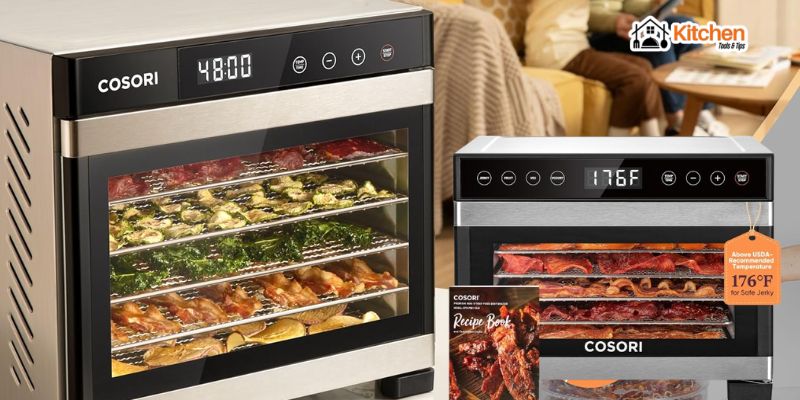
The COSORI 5-tray comes with everything you need to start. The box includes five stainless steel trays, one mesh screen, and one fruit roll sheet.
It has a 480-watt motor. The rear-mounted fan pushes air through all trays evenly.
The temp range goes from 95°F to 176°F. You adjust it in 1-degree steps. That’s precise control.
The digital panel is easy to read. You can set four presets: jerky, fruit, vegetables, and yogurt.
The timer runs up to 48 hours. It shuts off on its own when done.
The unit measures 13.9 by 11.3 by 8.9 inches. It fits on most counters without taking up too much room.
What I Like
The price point is fair for what you get. It’s not cheap, but it’s not overpriced either.
The presets save time. I press one button for jerky instead of setting temp and time manually.
The trays go in the dishwasher. Cleanup takes five minutes max.
It’s quiet enough to run at night. I measured it at about 50 decibels. That’s like a quiet conversation.
The recipe book helped me get started. It has ideas I never would have tried on my own.
Why It’s Better
This model beats cheaper units in two ways.
First, the temp goes up to 176°F. Budget models max out at 160°F. That matters for safe jerky making. The USDA says beef jerky needs 165°F minimum.
Second, the even airflow means no tray rotation. I tested a cheaper model before this. I had to swap trays every two hours. This one I just load and forget.
How It Performed
I tested this with four types of food: beef jerky, apple slices, banana chips, and dog treats.
Beef Jerky: I used three pounds of flank steak. I marinated it overnight in teriyaki sauce. I set the temp to 165°F and the timer for 6 hours.
The jerky came out perfect. It had a slight bend but didn’t snap. The texture was just right.
All five trays dried evenly. The top and bottom looked the same.
Apple Slices: I used four large apples. I sliced them 1/4 inch thick. I set the temp to 135°F for 8 hours.
The apples came out crispy. My kids loved them. They tasted sweet with no added sugar.
Banana Chips: Three bananas filled two trays. I used the fruit preset. It took 10 hours at 135°F.
The chips were crunchy and sweet. They lasted two weeks in a sealed bag.
Dog Treats: I made sweet potato chews for my dog. I sliced them thin and dried them at 135°F for 12 hours.
My dog went crazy for them. They were cheaper than store-bought treats.
How I Clean It
After each use, I let the machine cool down completely. Then I pull out all the trays.
Most of the time, I just put them in the dishwasher. For sticky fruit residue, I soak them first.
The inside of the machine gets wiped down with a damp cloth. I never submerge the base in water.
The mesh screen and fruit roll sheet need hand washing. They’re too delicate for the dishwasher.
Total cleaning time is about 10 minutes including the wipe-down.
Testing Results
Over six months, I made 40 batches in this dehydrator. It never failed once.
The temp stayed accurate. I checked it with an oven thermometer. It was always within 2 degrees of the setting.
The timer worked perfectly every time. It shut off right on schedule.
The trays still look new after heavy use. No rust or staining on the stainless steel.
One small issue: The fruit roll sheet is hard to clean. Fruit leather sticks to it. I have to soak it for 30 minutes.
Who Should Buy This
This model is great for beginners. It’s also good for small families of 2-4 people.
If you dry food once or twice a month, this is perfect. It’s not big enough for bulk processing.
I recommend it if you want to try dehydrating without spending too much. You can always upgrade later if you love it.
2. COSORI 6-Tray Food Dehydrator (Silver-L)
I upgraded to this model six months ago. It’s now my go-to machine.
Product Features
This unit has six trays instead of five. But here’s the key: each tray is bigger.
The total drying space is 6.5 square feet. That’s 27% more than a standard 7-tray model. It’s a lot bigger than the 5-tray version.
The motor is 600 watts instead of 480. That extra power makes a real difference in drying speed.
The temp range is 95°F to 165°F. It adjusts one degree at a time.
The timer goes up to 48 hours with auto shutoff.
It measures 17.9 by 13.5 by 12.2 inches. It’s bigger but still fits on my counter.
The noise level is below 48 decibels. That’s quieter than the 5-tray model.
What I Like
The extra space lets me dry more food in one batch. I can fit five pounds of sliced apples now instead of three.
The 600-watt motor cuts drying time by about 20%. My jerky that took 6 hours now takes about 5.
It’s whisper quiet. I can barely hear it running. I run it overnight without any sleep issues.
The larger trays mean less prep work. I don’t have to be as careful about spacing food out.
The build quality feels premium. Everything is sturdy and well-made.
Why It’s Better
This model beats the 5-tray version in speed and capacity. The extra power really shows.
I compared them side by side. I made identical batches of jerky in both. The 6-tray finished 45 minutes faster.
The larger trays save time on loading and unloading. I can fill all six trays in the time it took to fill five smaller ones.
The quieter motor is worth the upgrade alone. I can run this in my kitchen while I work. The 5-tray was too loud for that.
How It Performed
I’ve put this machine through its paces over six months. Here’s what I found.
Beef Jerky: I now make five-pound batches. I use all six trays. I set it to 165°F for 5 hours.
The jerky comes out consistent every time. The texture is perfect. The flavor stays strong.
Fruit Leather: I used the fruit roll sheet to make strawberry leather. Three pounds of berries filled two sheets. It took 8 hours at 135°F.
The leather peeled off easily. It rolled up without cracking. My kids ate it all in two days.
Herb Drying: I dried basil from my garden. Two large plants filled three trays. I set it to 95°F for 4 hours.
The herbs stayed bright green. They crumbled perfectly. The flavor was better than store-bought dried herbs.
Zucchini Chips: I sliced six zucchinis into thin rounds. They filled all six trays. I used 125°F for 10 hours.
The chips came out crispy. I seasoned them with salt and pepper. They made a great healthy snack.
Yogurt: I tried making yogurt using the unit as an incubator. I set it to 110°F for 8 hours.
It worked but I prefer my instant pot for yogurt. The dehydrator gets the job done though.
How I Clean It
The process is the same as the 5-tray model. All trays go in the dishwasher.
The larger size means they take up more room in the dishwasher. I usually run them in two loads.
The interior wipes clean with a damp cloth. The door window sometimes gets splattered. I use glass cleaner on it.
Total cleaning time is about 15 minutes for all six trays.
Testing Results
I’ve made over 60 batches in this machine. It’s been rock solid.
The temp control is more accurate than the 5-tray. I checked with my thermometer. It’s always within 1 degree.
The faster drying saves electricity. My power bill actually went down even though I’m drying more food.
The trays have held up great. No warping or damage despite heavy use.
The only downside is the larger footprint. It takes up more counter space. I leave mine out permanently now.
Who Should Buy This
This is my top pick for serious home users. If you dry food weekly, get this one.
It’s perfect for families of 4-6 people. It’s also great if you meal prep or make snacks in bulk.
The extra cost over the 5-tray is worth it. You get more space, more power, and quieter operation.
I recommend this for anyone who knows they’ll use it regularly. The investment pays off in saved time and better results.
3. Magic Mill 10-Tray Food Dehydrator
I borrowed this from a friend to test. It’s massive compared to the COSORI models.
Product Features
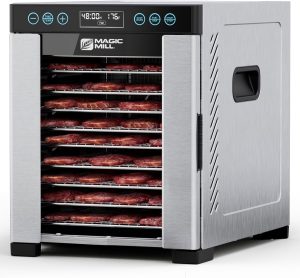
This beast comes with 10 stainless steel trays. The capacity is huge.
It has a 600-watt motor with rear-mounted fan. The airflow system ensures even drying.
The temp range is adjustable. The timer function includes auto shutoff.
It has a special keep-warm feature. After drying finishes, it keeps food warm until you’re ready.
The transparent door lets you check progress without opening it.
All trays are dishwasher safe. It includes mesh trays for small items and fruit leather sheets.
What I Like
The 10 trays let you dry enormous batches. I dried 10 pounds of jerky at once. That’s enough to last my family two months.
The keep-warm function is unique. I dried jerky overnight. It was still warm and ready when I woke up.
The transparent door is helpful. I check progress without letting heat escape.
The mesh trays work great for herbs and small items. Nothing falls through.
It’s built like a tank. The construction is solid and heavy-duty.
Why It’s Better
This model is for serious bulk processing. If you hunt, garden, or buy in bulk, this is your machine.
I dried an entire deer’s worth of jerky in two batches. With smaller machines, it would take six batches.
The commercial-grade build means it lasts. My friend has used his for three years with no issues.
How It Performed
I tested this for one month of heavy use.
Large Jerky Batch: Ten pounds of venison filled all 10 trays. I set it to 165°F for 6 hours.
Everything dried evenly. The quality was consistent across all trays.
Garden Harvest: I dried tomatoes, peppers, and herbs from my friend’s garden. Seven trays of vegetables took 12 hours at 135°F.
The results were excellent. We made tomato powder and crushed red pepper flakes.
Dog Treats in Bulk: I made 50 pounds of sweet potato chews. It took three batches over three days.
My friend sells these at a farmers market. The dehydrator paid for itself in two months.
Apple Chips: Twenty apples filled 8 trays. They dried in 9 hours at 135°F.
The chips were perfect. We bagged them for school lunches.
How I Clean It
With 10 trays, cleaning takes time. Each tray needs washing.
The trays are dishwasher safe but they’re large. I hand wash them in the sink. It takes about 20 minutes.
The interior is spacious. It’s easy to wipe down with a cloth.
The door window gets dirty. I clean it after every use.
Testing Results
This machine handles heavy loads without strain. The motor never struggled.
The temp stayed consistent even with all trays loaded. That’s impressive.
The keep-warm function works as advertised. Food stayed at 140°F until I removed it.
The size is the biggest issue. It’s tall and takes up a lot of counter space. You need a permanent spot for it.
It’s also heavy. Moving it around isn’t easy.
Who Should Buy This
This is for power users only. Don’t buy it unless you’ll use all 10 trays regularly.
It’s perfect for hunters who process game meat. It’s great for gardeners with large harvests.
If you make food to sell, this is worth considering. The capacity justifies the price.
For most families, it’s overkill. The COSORI 6-tray is a better choice.
Comparison: Which One Should You Choose?
Let me break down the key differences.
Price vs Value
The COSORI 5-tray costs about $108. It’s the cheapest option.
The COSORI 6-tray costs about $144. That’s $36 more for bigger trays and more power.
The Magic Mill 10-tray starts around $170. That’s the most expensive but you get the most capacity.
For most people, the 6-tray COSORI offers the best value. The extra $36 over the 5-tray is worth it for the improvements.
Capacity Comparison
The 5-tray holds about 3 pounds of jerky. That’s enough for a small family.
The 6-tray holds about 5 pounds of jerky. That’s 67% more capacity.
The 10-tray holds up to 10 pounds of jerky. That’s double the 6-tray.
Think about how much you’ll dry at once. Buy based on your real needs, not wishful thinking.
Drying Speed
The 5-tray with 480 watts takes 6 hours for jerky.
The 6-tray with 600 watts takes 5 hours for the same jerky. That’s a 17% time savings.
The 10-tray also has 600 watts. Drying time is similar to the 6-tray.
Faster drying saves electricity and gets you snacking sooner.
Noise Levels
All three are relatively quiet. But the 6-tray is the quietest at under 48 decibels.
The 5-tray runs around 50 decibels. Still quiet but noticeable.
The 10-tray is similar to the 6-tray. Around 48 decibels.
If noise matters, go with the 6-tray.
Counter Space
The 5-tray is the most compact. It fits easily on any counter.
The 6-tray is bigger but still manageable. Most kitchens can accommodate it.
The 10-tray is huge. You need dedicated counter space or a storage plan.
Measure your space before buying. Don’t guess.
How to Get the Best Results
I’ve learned some tricks over the years. Here’s what works.
Slice Thickness Matters
Cut everything evenly. Thick pieces take longer. Thin pieces dry faster.
I aim for 1/4 inch for most foods. Jerky can be a bit thicker at 1/8 to 1/4 inch.
Use a mandoline slicer for consistency. It saves time and improves results.
Don’t Overcrowd Trays
Leave space between pieces. Air needs to circulate.
I leave about 1/4 inch between each piece. Overlapping causes uneven drying.
It’s tempting to pack trays full. Resist that urge. You’ll get better results with proper spacing.
Pretreat Fruits
Dip apple and pear slices in lemon juice. This prevents browning.
Blanch vegetables before drying. It preserves color and texture.
These extra steps take a few minutes but improve the final product.
Check for Doneness
Dried food should be leathery, not brittle. Brittle means overdone.
Jerky should bend without breaking. If it snaps, it’s too dry.
Fruit should be pliable. You should be able to squeeze it without juice coming out.
Let food cool before testing. Hot food feels softer than cool food.
Store Properly
Keep dried food in airtight containers. I use mason jars and vacuum-sealed bags.
Store in a cool, dark place. Heat and light degrade quality.
Most dried foods last 6-12 months when stored correctly.
Label everything with the date. Use older batches first.
Common Mistakes to Avoid
I made these mistakes when I started. Learn from my errors.
Mistake 1: Not Preheating
Some foods need a preheated dehydrator. I learned this with jerky.
Preheat for 10 minutes before loading trays. This ensures consistent drying from the start.
Mistake 2: Opening the Door Too Often
Every time you check progress, you let heat out. This extends drying time.
Check through the window if your model has one. Only open when necessary.
Mistake 3: Drying Too Fast
High temps seem efficient but they can case-harden food. The outside dries but the inside stays moist.
Use the recommended temps for each food type. Patience pays off.
Mistake 4: Not Rotating Batches
Even with rear-mounted fans, some rotation helps. I swap the top and bottom trays halfway through.
This ensures everything dries evenly. It takes 30 seconds and improves results.
Mistake 5: Forgetting to Clean
Old food residue affects new batches. It can cause off flavors.
Clean thoroughly after each use. Don’t let buildup accumulate.
Safety Tips for Dehydrating
Food safety matters. Follow these rules.
Temperature for Meat
Always use 165°F for beef jerky. This kills harmful bacteria.
The USDA recommends this temp. Don’t go lower even if recipes say otherwise.
Don’t Reuse Marinades
Marinades that touched raw meat contain bacteria. Never save them for later use.
If you want sauce for cooked jerky, make a separate batch that never touched raw meat.
Cool Before Storing
Hot food creates condensation in containers. This leads to mold.
Let everything cool to room temp before storing. Spread it on a rack to cool faster.
Check for Spoilage
If dried food develops an off smell, throw it out. Don’t taste it to check.
Mold means spoilage. Discard the entire batch.
Money-Saving Tips
Dehydrating saves money. Here’s how to maximize savings.
Buy in Bulk
I buy meat when it’s on sale. I buy 10 pounds at once and make jerky.
Bulk buying cuts costs by 30-50% compared to buying small amounts.
Use Garden Produce
If you garden, dehydrate your harvest. This prevents waste.
I dried 50 pounds of tomatoes last summer. That saved me $100 in store-bought dried tomatoes.
Make Your Own Snacks
Store-bought dried fruit costs $8-12 per pound. Homemade costs $3-5 per pound.
Jerky savings are even bigger. Store jerky costs $25+ per pound. Homemade costs $8-10 per pound.
Energy Efficiency
Run your dehydrator overnight when electricity rates are lower. Some areas have off-peak pricing.
Full loads are more efficient than partial loads. Wait until you have enough food to fill most trays.
FAQs
How long does dehydrated food last?
Dried food lasts 6-12 months when stored properly. Keep it in airtight containers in a cool, dark place. Vacuum sealing extends shelf life even more.
Can I dehydrate frozen food?
Yes, but thaw it first. Frozen food has ice crystals that add moisture. Pat it dry before dehydrating for best results.
Do I need to rotate trays?
With rear-mounted fans, rotation isn’t required but it helps. I swap top and bottom trays halfway through drying. This ensures even results.
Can I use parchment paper instead of fruit roll sheets?
No. Regular parchment paper can burn at dehydrator temps. Use only accessories made for dehydrators. They’re heat-safe and non-stick.
Why is my jerky too tough?
You over-dried it. Next time, check earlier. Jerky should bend without breaking. If it snaps, it’s overdone. You can’t fix it once it’s too dry.
How do I know when food is done?
Cool a piece to room temp and test it. Fruit should be leathery but pliable. Jerky should bend without breaking. Vegetables should be brittle. Each food type has different done indicators.
Can I dry different foods together?
Yes, but strong flavors can transfer. Don’t dry onions with fruit. Keep similar foods together. Rotate batches if mixing strong and mild flavors.
My Final Recommendation
After testing all three, here’s my honest advice.
For most people, buy the COSORI 6-tray. It offers the best balance of capacity, speed, and price. The quieter operation and extra power make it worth the upgrade over the 5-tray.
If budget is tight, the COSORI 5-tray is solid. You sacrifice some capacity and speed but it still delivers good results. It’s perfect for beginners who want to try dehydrating.
The Magic Mill 10-tray is for bulk processing only. Unless you regularly dry 10+ pounds of food, it’s overkill. But if you need that capacity, it’s built to handle it.
I use my COSORI 6-tray every week. It’s become an essential kitchen tool. My family saves money and eats healthier snacks.
Dehydrating is easier than most people think. With the right machine, you’ll wonder why you didn’t start sooner.
Start small if you’re nervous. Make one batch of apple chips. If you like the results, keep going.
The investment pays for itself in saved money on store-bought snacks. Plus, you control the ingredients. No preservatives or added sugar.
I hope this guide helps you choose the right dehydrator. Happy drying!