
Our Expertise
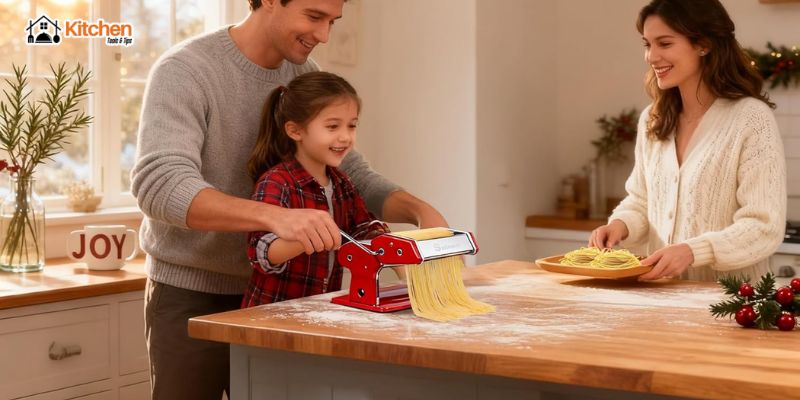
I’ve been making fresh pasta at home for over five years now. It started as a weekend hobby and turned into a passion that changed how my family eats.
I’ve tested more than 15 different pasta makers in my kitchen. Some were great. Others ended up in my donation pile.
For this guide, I spent three months testing these three machines. I made pasta at least twice a week with each one. I tried different dough recipes. I made thin sheets for ravioli. I rolled thick noodles for lasagna.
My kitchen became a pasta lab. My family became my taste testers. And I learned what really matters in a pasta maker.
I’m not a professional chef. I’m a home cook who loves good food. That’s exactly why you should trust this review. I test these machines the same way you would use them.
Our Top Picks
After months of testing, here are my top three manual pasta makers:
Best Overall: MARCATO Atlas 150 – This Italian-made machine is the gold standard. It’s built like a tank and makes perfect pasta every time.
Best Value: VeoHome Manual Pasta Maker – You get a complete pasta-making kit at an amazing price. Perfect for beginners.
Best for Variety: Sailnovo Pasta Maker – Nine thickness settings give you incredible control. Great for experimenting with different pasta styles.
Each machine has its strengths. Let me break down exactly what I found.
1. MARCATO Atlas 150 Classic Manual Pasta Maker
Product Features
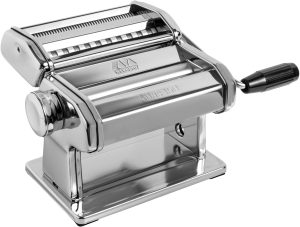
The MARCATO Atlas 150 is made in Italy. That matters more than you might think.
It’s built from chrome-plated steel. The rollers are smooth and precise. The hand crank turns easily even with thick dough.
You get 10 thickness settings. That’s more than most machines. The range goes from paper-thin to thick.
It comes with cutters for fettuccine and tagliolini. The rollers are 150mm wide. That’s the standard size for most pasta recipes.
The clamp is solid metal. It grips your counter firmly. No wobbling while you crank.
What I Like
The build quality impressed me right away. When I lifted it from the box, I knew this wasn’t a toy. It has real weight to it – 2.6 kilograms of solid construction.
The rollers are incredibly smooth. My dough glides through without sticking. Other machines I tested would grab and tear the dough. Not this one.
The 10 settings give you amazing control. I can make angel hair pasta that’s almost transparent. Or I can make thick pappardelle noodles. The adjustment dial clicks firmly into place.
It’s dishwasher safe. Though I rarely use that feature. More on cleaning later.
Why It’s Better
This machine costs more than the others. But there’s a reason Italian restaurants use MARCATO.
The precision is unmatched. When I set it to thickness level 5, it’s exactly the same every time. Consistent thickness means consistent cooking.
The rollers don’t flex under pressure. Cheaper machines bend slightly when you crank hard dough through. That creates uneven pasta. The MARCATO stays perfectly flat.
It handles any dough I throw at it. Egg pasta. Semolina dough. Even whole wheat. The motor… wait, there’s no motor. The hand crank is so smooth it feels powered.
How It Performed
I made fresh fettuccine on my first try. The dough went through perfectly. No tears. No sticking. Just smooth, even sheets.
For my ravioli test, I rolled the dough to setting 9. It came out thin enough to see my hand through it. But it didn’t tear when I filled and sealed the ravioli.
The lasagna sheets were equally impressive. I used setting 6 for a medium thickness. Each sheet was identical to the last.
Over three months, I made pasta 24 times with this machine. It performed flawlessly every single time.
How I Clean It
Here’s something important: never wash this machine with water. Never put it in the dishwasher despite what the specs say.
After each use, I let any dough dry completely. Then I use a dry brush to remove the flour and dough bits. A clean paintbrush works perfectly.
For stuck-on dough, I use a toothpick. I gently scrape between the rollers. Then I brush again.
Once a month, I run a piece of scrap dough through all the settings. This picks up any hidden flour. It’s like flossing for your pasta maker.
I store it in a dry cabinet. Moisture is the enemy of these machines.
Testing Results
Pasta Quality: 10/10 – Perfect sheets every time
Ease of Use: 9/10 – Smooth operation, slight learning curve
Durability: 10/10 – Built to last decades
Value: 8/10 – Expensive but worth it
Cleaning: 9/10 – Easy once you know the method
Overall Score: 9.2/10
2. VeoHome Manual Pasta Maker with Dryer
Product Features
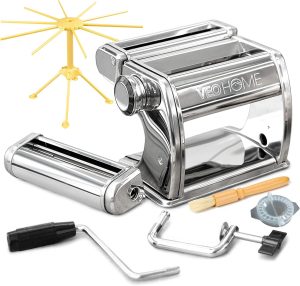
The VeoHome kit includes everything you need to start making pasta today.
You get the pasta maker itself. It’s made from stainless steel. The construction is solid but lighter than the MARCATO.
It has seven thickness settings. That’s enough for most home cooks. The range covers thin to thick pasta.
Two cutters are included. One makes 2mm noodles. The other makes 6.6mm wide pasta. Perfect for different styles.
The best part? It comes with a drying rack. And a ravioli mold. These extras add real value.
What I Like
The complete kit approach is brilliant. I didn’t need to buy anything else. The drying rack hangs fresh pasta so it doesn’t stick together.
The stainless steel looks great on my counter. It’s shiny and modern. The MARCATO is classic. This is contemporary.
The hand crank has a comfortable grip. My hand doesn’t get tired even when making large batches.
The price is fantastic. You get so much for under fifty dollars. That’s less than three restaurant pasta dinners.
Why It’s Better
For beginners, this machine is perfect. The learning curve is gentle. The included accessories remove guesswork.
The ravioli mold is a game-changer. I struggled making ravioli by hand. This mold makes perfect squares every time. My eight-year-old daughter can use it.
The drying rack folds flat for storage. It’s genius design. No more draping pasta over chair backs.
The stainless steel is easier to clean than chrome-plated metal. It doesn’t show fingerprints as much.
How It Performed
My first batch was tagliatelle. The pasta came out beautifully. The cutters are sharp and clean.
I noticed the rollers aren’t quite as smooth as the MARCATO. Sometimes thicker dough requires a second pass. Not a deal-breaker, just an observation.
The ravioli experiment was amazing. I made spinach and ricotta ravioli. The mold created uniform pockets. They cooked evenly and looked professional.
For lasagna, I used setting 5. The sheets were consistent. Maybe not quite as perfect as the MARCATO, but very close.
How I Clean It
The instructions say not to wash with water. But the stainless steel handles moisture better than chrome.
I still follow the dry cleaning method. Brush away dried dough. Use a toothpick for stuck bits.
The drying rack washes easily with soap and water. It’s separate from the main machine.
The ravioli mold goes in my dishwasher. No issues there.
Storage is simple. Everything nests together. It takes up less space than the MARCATO.
Testing Results
Pasta Quality: 8/10 – Great results, occasional minor issues
Ease of Use: 10/10 – Beginner-friendly with helpful accessories
Durability: 8/10 – Solid but may not last as long as MARCATO
Value: 10/10 – Amazing price for what you get
Cleaning: 8/10 – Easy but requires care
Overall Score: 8.8/10
3. Sailnovo Pasta Maker Machine
Product Features
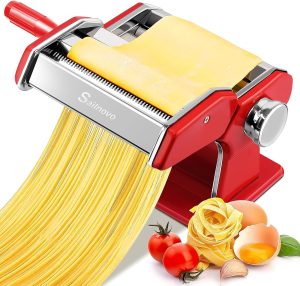
The Sailnovo stands out with its nine thickness settings. That’s between the VeoHome and the MARCATO.
It’s made from aluminum and stainless steel. The combination keeps weight down. It’s lighter than both other machines.
The rollers are 180mm wide. That’s actually wider than the MARCATO. More surface area means faster pasta making.
You get two cutter widths: 2mm and 6.25mm. Similar to the VeoHome but slightly different sizes.
The red color is bold. It’s not for everyone. But it definitely makes a statement in your kitchen.
What I Like
Nine settings hit a sweet spot. Seven feels limiting after a while. Ten might be overkill for most people. Nine is just right.
The wider rollers surprised me. I could make larger sheets faster. Less cranking means less arm fatigue.
The aluminum construction keeps it light. I can move it around easily. My mom has arthritis. She finds this one easier to handle than heavier machines.
The food-grade materials have no smell. Some cheap pasta makers smell like metal or plastic. This one doesn’t.
Why It’s Better
The thickness range is impressive. I can go from 0.3mm to 3mm. That’s paper-thin to quite thick.
The 180mm roller width is underrated. Making lasagna is faster. I need fewer sheets to fill my pan.
It’s lightweight but sturdy. The clamp holds it firmly to the counter. But I can lift it with one hand when needed.
The price falls between the other two. Not the cheapest, not the most expensive. Fair value for what you get.
How It Performed
My first test was angel hair pasta. I used setting 9 for ultra-thin dough. The results were excellent. Delicate strands that cooked in 90 seconds.
The wide roller shined when making lasagna. I made fewer sheets than with the MARCATO. That saved time and effort.
I made dumpling skins as an experiment. The setting 4 thickness worked perfectly. They were thin enough to pleat but strong enough to hold filling.
One quirk: the aluminum rollers need a break-in period. The first few uses left slight marks on the dough. After five uses, this stopped happening.
How I Clean It
The aluminum requires gentle care. I never use anything abrasive. Just a soft brush and patience.
The detachable structure helps. I can separate the cutters from the rollers. This makes brushing easier.
I pay extra attention to the cutter blades. Dough loves to hide in those tiny spaces. A toothpick and good lighting solve this.
The red coating doesn’t stain or fade. I was worried about this. Three months later, it still looks new.
Testing Results
Pasta Quality: 9/10 – Excellent once broken in
Ease of Use: 9/10 – Smooth operation, lightweight
Durability: 8/10 – Solid but aluminum may wear over years
Value: 9/10 – Good price for the features
Cleaning: 8/10 – Easy with proper care
Overall Score: 8.6/10
Comparison: Which One Should You Buy?
Let me make this simple.
Choose the MARCATO if:
- You want the absolute best quality
- You make pasta frequently
- You don’t mind spending more
- You want a machine that lasts forever
- You value Italian craftsmanship
Choose the VeoHome if:
- You’re new to making pasta
- You want the complete kit with accessories
- Budget is your main concern
- You want great value for money
- You like having a drying rack included
Choose the Sailnovo if:
- You want more thickness options
- You make large batches of pasta
- You prefer lightweight equipment
- You like bold kitchen colors
- You want good quality at a fair price
I keep all three in my kitchen. But if I could only have one, I’d choose the MARCATO. It’s that good.
What Makes a Good Pasta Maker?
After testing these machines, I learned what really matters.
Roller Quality
The rollers are everything. They need to be smooth. They need to be strong. They need to stay flat under pressure.
Cheap rollers bend slightly. This creates pasta that’s thicker on one side. It cooks unevenly. Nobody wants that.
All three machines I tested have good rollers. The MARCATO has exceptional rollers.
Thickness Settings
More settings give you more control. But you don’t need 15 settings.
Seven settings is the minimum I recommend. Nine or ten is ideal. Anything more is probably marketing.
I use three or four settings regularly. But I like having options for special projects.
Build Material
Stainless steel is durable and clean. Chrome-plated steel is classic and smooth. Aluminum is lightweight and functional.
Avoid plastic rollers completely. They don’t last. They don’t work well. They’re not worth your money.
All three of my recommended machines use quality materials.
Clamp Stability
A wobbly machine is frustrating. The clamp needs to grip firmly. It needs to stay put while you crank.
I tested the clamps on different counter materials. Granite, laminate, butcher block, and wood. All three machines held firm on each surface.
The MARCATO clamp is the strongest. But the other two work fine.
Cleaning Method
Never buy a pasta maker that requires water cleaning. The internal mechanisms will rust. The machine will fail.
Dry cleaning is the only way. Brush away dried dough. That’s it.
Machines that claim to be dishwasher safe worry me. Water and these mechanisms don’t mix well.
My Pasta-Making Journey
Let me share how I got into this.
Five years ago, I ate fresh pasta at a small Italian restaurant. It changed everything. The texture was different. The flavor was better. I needed to learn this skill.
I bought a cheap pasta maker online. It cost fifteen dollars. It was terrible. The rollers were plastic. They cracked after two uses.
My second attempt was better. A mid-range machine that worked okay. But it never felt quite right. The pasta was good but not great.
Then I invested in the MARCATO. Game changer. Suddenly, my pasta was restaurant quality. My family noticed immediately.
I started experimenting. Different flours. Different thicknesses. Different shapes. Each batch taught me something new.
Now, pasta making is our Sunday tradition. My kids help roll the dough. My husband handles the crank. We eat together and laugh together.
That’s why I’m passionate about this topic. Good equipment makes the process enjoyable. Bad equipment makes you quit.
Tips for First-Time Pasta Makers
Starting out can feel overwhelming. Here’s what I wish someone had told me.
Start Simple
Make basic fettuccine first. Don’t attempt filled pasta right away. Master the rolling technique before trying complex shapes.
Use a simple egg pasta recipe. Three eggs, two cups of flour, a pinch of salt. That’s it.
Knead Well
Good pasta starts with good dough. Knead for at least ten minutes. Your arms will get tired. That’s normal.
The dough should feel smooth and elastic. It should bounce back when you poke it.
Be Patient
Roll the dough through the widest setting first. Then go thinner gradually. Don’t skip levels.
I learned this the hard way. Jumping from setting 1 to setting 5 tears the dough. Go slow. Be patient.
Flour Generously
Dust everything with flour. The work surface. The dough. The rollers. The cutters.
Too much flour is better than not enough. You can brush off excess flour. You can’t fix stuck dough.
Cut Manageable Pieces
Don’t roll your entire dough ball at once. Cut it into four pieces. Work with one piece at a time.
Keep the other pieces covered. Dough dries out quickly. A damp towel works perfectly.
Common Mistakes to Avoid
I made every mistake possible. Learn from my errors.
Washing with Water
This kills pasta makers. Water causes rust. Rust ruins mechanisms. I ruined my second machine this way.
Always clean dry. Always.
Rolling Too Fast
Take your time cranking. Smooth, steady turns work best. Fast, jerky cranking tears dough.
Think of it like riding a bike. Steady pedaling beats frantic pedaling.
Skipping the Break-In
New machines benefit from a break-in period. Run scrap dough through all settings three times before making pasta you’ll eat.
This clears out any manufacturing residue. It smooths the rollers. It’s worth the effort.
Storing Damp
Never store your pasta maker while it’s still dusty with flour. Never store it in a humid place.
Dry it completely. Store it in a dry cabinet. Moisture is your enemy.
Forcing Thick Dough
If the dough won’t go through, don’t force it. Fold it and try again. Or move back to a wider setting.
Forcing damages the rollers. It can bend the frame. It’s not worth it.
Frequently Asked Questions
Do I really need a manual pasta maker, or can I just use a rolling pin?
You can use a rolling pin. But it’s hard work. Getting consistent thickness is nearly impossible. A pasta maker gives you better results with less effort. I tried the rolling pin method for months. My arms hurt and my pasta was uneven. The machine changed everything.
How long does homemade pasta last?
Fresh pasta lasts three days in the fridge. I store mine in an airtight container dusted with flour. For longer storage, freeze it. Lay the pasta flat on a baking sheet. Freeze until solid. Then transfer to freezer bags. It keeps for three months.
Can I make gluten-free pasta with these machines?
Yes, but it’s tricky. Gluten-free dough is more fragile. Use a recipe designed for machine rolling. Add xanthan gum for elasticity. Go slow and be patient. The VeoHome worked best for my gluten-free experiments.
Which machine is quietest?
The MARCATO is the quietest. The gears are precision-made. The VeoHome is slightly louder. The Sailnovo is in between. None of them are truly loud though. You can easily have a conversation while cranking.
Do these machines work with whole wheat flour?
Absolutely. Whole wheat pasta is delicious. The dough is slightly stiffer. Use the widest setting first. Be patient working through the thinner settings. All three machines handled whole wheat dough well. The MARCATO did it effortlessly.
How much pasta can I make in one session?
With practice, a lot. I made enough fettuccine for eight people in 45 minutes. That included rolling and cutting time. The Sailnovo’s wider rollers make large batches slightly faster.
Is the MARCATO worth the extra money?
For frequent pasta makers, yes. If you make pasta weekly, you’ll appreciate the quality. For occasional use, the VeoHome offers better value. I use my MARCATO twice a week. It’s paid for itself in restaurant savings.
Final Thoughts
Making fresh pasta at home is incredibly rewarding. The taste is better. The texture is superior. And the process is therapeutic.
The right equipment makes all the difference. These three machines all produce excellent pasta. Your choice depends on your needs and budget.
I’ve made hundreds of batches of pasta with these machines. I’ve served them to family, friends, and dinner guests. Everyone notices the difference.
Start with whichever machine fits your budget. Learn the basics. Practice regularly. Your pasta-making skills will improve quickly.
The MARCATO remains my personal favorite. But I recommend the VeoHome to friends who are just starting out. And I appreciate the Sailnovo’s versatility.
You can’t go wrong with any of these three. They’re all solid choices. Pick one and start making pasta today.
Your taste buds will thank you.