
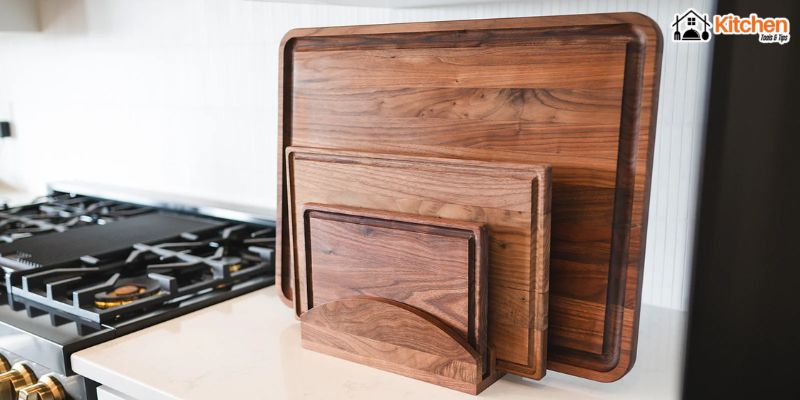
Cutting boards take up valuable kitchen space. You need them daily, but storing them can be tricky. The right storage keeps your boards clean, dry, and ready to use.
This guide shares simple ways to store cutting boards in any kitchen. You’ll save space and protect your boards from damage.
Why Proper Cutting Board Storage Matters
Good storage does more than save space. It keeps your cutting boards in great shape.
Here’s why storage matters:
- Prevents warping: Boards stored flat or upright dry evenly and stay straight
- Stops bacteria growth: Proper airflow keeps boards dry and clean
- Extends board life: Protected boards last years longer
- Saves time: Easy access means faster meal prep
- Reduces clutter: Organized storage frees up counter space
Wood cutting boards need special care. They can crack or warp if stored wrong. Plastic and bamboo boards are more forgiving but still need good storage.
Best Cutting Board Storage Ideas
1. Vertical Divider Racks
Store boards upright in cabinet dividers. This method works great for multiple boards.
Benefits: Saves horizontal space, easy to grab one board, good air circulation
Install dividers in lower cabinets near your prep area. Make sure boards fit without forcing them in.
2. Between Cabinet and Appliance
Slide cutting boards into the gap between your fridge and counter. Many kitchens have this narrow space.
This free storage spot works well for thin boards. Add a simple wire rack to hold boards in place.
3. Wall-Mounted Holders
Mount a rack on your kitchen wall or inside a cabinet door. Wall storage keeps boards visible and accessible.
Choose racks with slots or hooks. Make sure they hold boards securely without tipping.
4. Drawer Storage with Pegs
Use drawer organizers with adjustable pegs. Stand boards upright in deep drawers.
This method hides boards away while keeping them organized. It works best in drawers at least 3 inches deep.
5. Over-the-Door Organizers
Hang an organizer on your pantry or cabinet door. These racks have multiple slots for different board sizes.
Door storage uses dead space. It’s perfect for small kitchens with limited cabinet room.
6. Pull-Out Cabinet Organizers
Install a pull-out rack inside a base cabinet. These slide out like a drawer for easy access.
Pull-out organizers hold multiple boards vertically. They maximize cabinet depth and keep boards separated.
7. Countertop Bamboo Racks
Place a standalone rack on your counter. These decorative holders display boards while keeping them handy.
Pick a design that matches your kitchen style. Keep the rack near your cutting area for convenience.
8. Under-Sink Storage
Use the space under your kitchen sink. Install a vertical rack on the cabinet door or side wall.
Make sure boards stay dry in this area. Avoid storing them where water might splash.
9. Magnetic Knife Strip Method
Mount a strong magnetic strip on the wall. This works only for boards with metal handles or hooks.
It’s a creative solution for modern kitchens. The strip keeps boards off counters and visible.
10. Tension Rod Dividers
Install tension rods vertically in cabinets. Space them to create slots for boards.
This cheap DIY solution costs just a few dollars. Adjust rod spacing to fit your board sizes.
Storage Tips by Cutting Board Type
Different materials need different care.
Wood Cutting Boards:
- Store vertically for even drying
- Keep away from heat sources and dishwashers
- Leave space between boards for air flow
- Apply mineral oil monthly before storing long-term
Plastic Cutting Boards:
- Stack or store vertically
- Dishwasher-safe, but air-dry before storing
- More flexible with storage options
- Replace when heavily scratched
Bamboo Cutting Boards:
- Treat similar to wood boards
- Store in cool, dry places
- Avoid direct sunlight
- Keep away from moisture
Glass and Composite Boards:
- Stack flat or store vertically
- More durable, fewer storage restrictions
- Heavy, so ensure racks are sturdy
Common Storage Mistakes to Avoid
Don’t make these errors:
Storing wet boards: Always dry boards completely before putting them away. Moisture causes mold, warping, and bad smells.
Stacking without space: Boards stacked tightly trap moisture. Leave gaps between them or use dividers.
Laying flat in dark cabinets: Boards lying flat in enclosed spaces can’t dry properly. This leads to bacteria growth.
Storing near heat: Keep boards away from stoves, ovens, and dishwashers. Heat damages wood and warps plastic.
Overcrowding storage: Cramming too many boards in one spot makes them hard to reach. It also prevents air circulation.
Forgetting to clean before storage: Food particles attract pests and bacteria. Always clean and dry boards before storing.
Quick Storage Setup Guide
Follow these steps:
- Measure your cutting boards (length, width, thickness)
- Check available storage spaces in your kitchen
- Pick a storage method that fits your space
- Install or set up your chosen solution
- Arrange boards by size or use frequency
- Test accessibility and adjust as needed
Conclusion
Smart cutting board storage makes your kitchen work better. Choose a method that fits your space and board collection.
Vertical storage works best for most kitchens. It saves space, protects boards, and keeps them accessible. Wall-mounted racks and cabinet dividers are the most popular choices.
Remember to keep boards dry and separated. Good storage habits extend board life and maintain kitchen hygiene.
Start with one storage solution today. Your organized kitchen will make cooking easier and more enjoyable.