
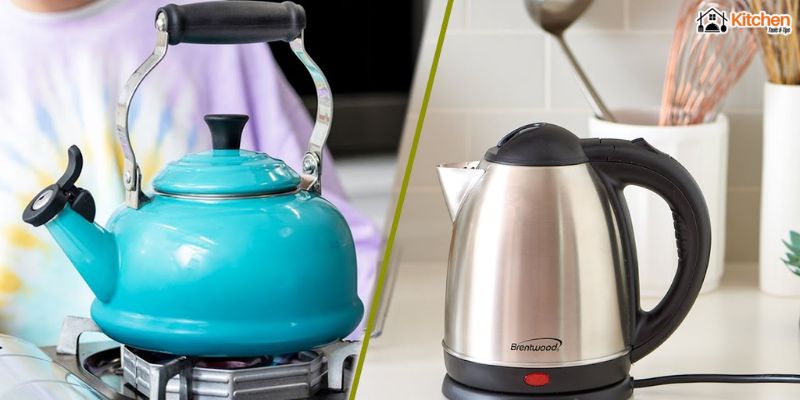
Choosing between an electric kettle and a stovetop kettle can be tricky. Both heat water, but they work differently and offer unique benefits.
This guide breaks down the key differences to help you make the right choice for your kitchen.
What Is an Electric Kettle?
An electric kettle is a standalone appliance that plugs into an electrical outlet. It heats water using an internal heating element.
You simply fill it with water, press a button, and wait for it to boil. Most models shut off automatically when the water reaches boiling point.
Popular brands include Cuisinart, Hamilton Beach, and Breville.
What Is a Stovetop Kettle?
A stovetop kettle sits on your gas or electric stove. You heat water by placing the kettle over a burner.
These kettles are often made from stainless steel, aluminum, or copper. Many feature a whistle that signals when water is boiling.
Classic brands include Le Creuset, OXO, and Chantal.
Speed: Which Boils Water Faster?
Electric kettles win on speed.
They typically boil water in 3 to 4 minutes. The heating element sits directly in the water, which creates faster heat transfer.
Stovetop kettles take 5 to 10 minutes, depending on your stove type. Gas stoves heat faster than electric coil stoves.
Winner: Electric kettle for speed.
Energy Efficiency and Cost
Electric kettles are more energy-efficient.
They convert about 80% of energy into heat. This means less wasted energy and lower electricity bills.
Stovetop kettles on gas stoves use about 40% of the energy for heating. The rest escapes into the air. Electric stoves are slightly better but still less efficient than electric kettles.
Over time, electric kettles can save you money on energy costs.
Winner: Electric kettle for energy efficiency.
Safety Features
Electric kettles offer better safety features.
Most include:
- Automatic shut-off when water boils
- Boil-dry protection (shuts off if no water inside)
- Cool-touch exterior handles
- Cordless pouring (kettle lifts off the base)
Stovetop kettles require more attention. You must watch them to prevent boiling dry or overheating. However, they often have heat-resistant handles and whistle alerts.
Winner: Electric kettle for built-in safety.
Durability and Lifespan
Stovetop kettles typically last longer.
A quality stainless steel stovetop kettle can last 10 to 20 years or more. They have no electrical components to break.
Electric kettles usually last 3 to 5 years. The heating element and electronics can wear out over time. However, premium models may last longer with proper care.
Winner: Stovetop kettle for durability.
Price Comparison
Stovetop kettles are generally cheaper upfront.
Basic stovetop kettles cost $15 to $40. High-end models range from $50 to $100.
Electric kettles start around $20 for basic models. Mid-range options cost $30 to $60. Premium kettles with temperature control can cost $80 to $150.
However, remember that electric kettles save money on energy bills over time.
Winner: Stovetop kettle for initial cost, electric kettle for long-term savings.
Convenience and Ease of Use
Electric kettles are more convenient for daily use.
You can place them anywhere near an outlet. They boil water quickly and shut off automatically. Many models have temperature settings for different beverages like green tea, coffee, or baby formula.
Stovetop kettles require stove space and more attention. You must turn off the burner manually. However, they work during power outages and don’t need an electrical outlet.
Winner: Electric kettle for everyday convenience.
Best Use Cases for Each Type
Choose an electric kettle if you:
- Want fast boiling times
- Drink tea or coffee multiple times daily
- Need precise temperature control
- Have limited stove space
- Value automatic shut-off features
- Want energy efficiency
Choose a stovetop kettle if you:
- Already have a full kitchen with a stove
- Prefer traditional cooking methods
- Want a kettle that lasts decades
- Live in an area with frequent power outages
- Have a tight budget
- Enjoy the aesthetic of classic kitchenware
Which Kettle Is Right for You?
The best choice depends on your lifestyle and priorities.
For busy households that value speed and convenience, an electric kettle is the clear winner. It boils water faster, uses less energy, and requires minimal supervision.
For traditional cooks who want a durable, long-lasting option, a stovetop kettle makes sense. It’s simple, reliable, and works without electricity.
Many households actually keep both types. An electric kettle for daily tea and coffee, and a stovetop kettle as a backup during power outages.
Final Thoughts
Both electric and stovetop kettles have their place in modern kitchens.
Electric kettles offer speed, safety, and energy savings. Stovetop kettles provide durability, simplicity, and classic appeal.
Consider your daily routine, budget, and kitchen setup before deciding. Either choice will serve you well for years of hot beverages.
The right kettle is the one that fits seamlessly into your life.