
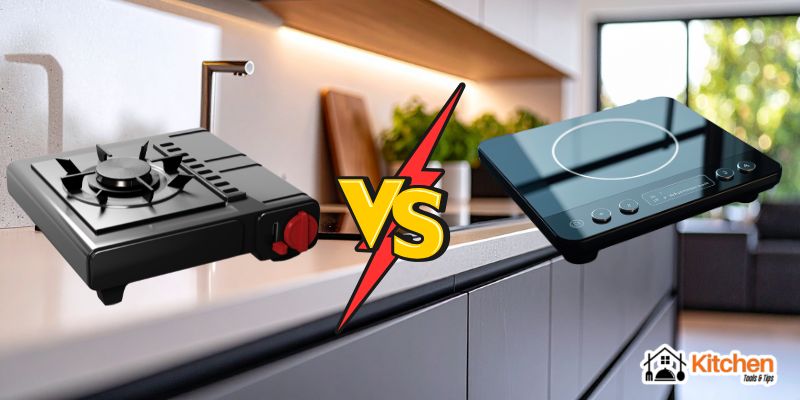
Choosing between a gas stove and an induction cooktop is a big decision for any kitchen. Both cooking appliances have loyal fans, but they work very differently. This guide breaks down everything you need to know to make the right choice for your home.
What Is a Gas Stove?
A gas stove uses natural gas or propane to create an open flame. You turn a knob, gas flows through burners, and you get instant heat. Gas stoves have been popular for decades because chefs love the visible flame and instant temperature control.
Most gas ranges connect to your home’s natural gas line. If you don’t have gas access, you can use propane tanks instead.
What Is an Induction Cooktop?
An induction cooktop uses electricity and magnetic fields to heat your cookware directly. There’s no open flame or hot coil. When you place a magnetic pot on the surface, the cooktop creates heat inside the pan itself.
The glass surface stays relatively cool to touch. Only the area under your pot heats up. This technology is newer than gas cooking but is growing fast in popularity.
Key Differences Between Gas and Induction
Heat Source: Gas creates heat through combustion. Induction generates heat through electromagnetic energy.
Cookware Requirements: Gas works with any pot or pan. Induction needs magnetic cookware like cast iron or stainless steel. Aluminum and copper pans won’t work unless they have a magnetic base.
Visual Feedback: Gas gives you a visible flame. Induction shows no flame, just digital controls and indicator lights.
Installation: Gas requires a gas line connection. Induction plugs into a standard electrical outlet or needs hardwiring for larger units.
Cooking Performance Comparison
Speed: Induction wins for speed. It boils water 2-3 minutes faster than gas. The electromagnetic field heats cookware almost instantly.
Gas takes longer to heat up but still performs well.
Temperature Control: Both offer excellent control, but differently. Gas lets you see the flame size and adjust instantly. Induction provides precise digital temperature settings.
Professional chefs traditionally prefer gas for its responsiveness. But modern induction cooktops now rival gas in precision.
Even Heating: Induction distributes heat more evenly across the pan bottom. Gas creates hot spots where flames touch the cookware.
Cost Comparison
Purchase Price: Gas stoves cost $500-$2,500 on average. Basic models start around $400.
Induction cooktops range from $1,000-$3,000. Entry-level portable units cost $60-$150.
Induction typically costs more upfront.
Installation Costs: If you already have a gas line, installation runs $100-$300. Adding a new gas line costs $500-$2,000.
Induction installation is simpler. Most units need a 240-volt outlet, which costs $300-$800 if you don’t have one.
Operating Costs: Induction uses less energy, so monthly bills are lower. Gas costs vary by region but are often cheaper per unit of energy.
Long-term, induction saves money on electricity bills.
Safety Features
Gas Safety Concerns:
- Open flames can cause burns
- Gas leaks pose explosion risks
- Carbon monoxide emissions need proper ventilation
- Can ignite nearby items like towels or paper
Induction Safety Benefits:
- No open flame reduces fire risk
- Surface stays cool to touch
- Automatic shut-off when you remove cookware
- No gas leaks or carbon monoxide
- Safer for homes with children
Induction is the safer choice overall. The cooktop won’t burn you if you accidentally touch it.
Energy Efficiency
Induction cooktops are 85-90% energy efficient. Almost all electricity converts directly to heat in your cookware.
Gas stoves are only 40% efficient. Most heat escapes into your kitchen instead of cooking your food.
This means:
- Induction cooks faster with less wasted energy
- Your kitchen stays cooler with induction
- Lower carbon footprint with induction cooking
Maintenance and Cleaning
Cleaning Induction: Induction cooktops are easy to clean. The flat glass surface wipes clean with a damp cloth. Food doesn’t burn onto the surface since it stays cool.
Spills don’t bake on like with traditional electric stoves.
Cleaning Gas: Gas stoves require more work. You must remove grates and burner caps. Food spills around burners and knobs. Grease buildup happens faster.
Cleaning under and around burners takes time and effort.
Winner: Induction is much easier to maintain.
Environmental Impact
Induction cooktops produce zero direct emissions. If your electricity comes from renewable sources, your cooking is carbon-neutral.
Gas stoves release nitrogen dioxide, carbon monoxide, and methane. These pollutants affect indoor air quality. Recent studies show gas stoves can worsen asthma and respiratory issues.
Many cities now encourage or require electric cooking in new construction for environmental and health reasons.
Which One Should You Choose?
Choose Gas If:
- You already have gas lines installed
- You prefer cooking with visible flames
- You have non-magnetic cookware you love
- You live where electricity is unreliable
- You want lower upfront costs
Choose Induction If:
- You value energy efficiency
- Safety is a top priority
- You want easy cleaning
- You’re building or renovating your kitchen
- You care about indoor air quality
- You want the fastest cooking times
Conclusion
Both gas stoves and induction cooktops are excellent cooking appliances. Gas offers familiar performance and works with any cookware. Induction provides superior efficiency, safety, and cleaning ease.
The best choice depends on your priorities. If you value speed, safety, and efficiency, choose induction. If you prefer traditional cooking methods and lower upfront costs, gas works well.
Consider your budget, existing kitchen setup, and cooking style. Both options will serve you well for years to come.