
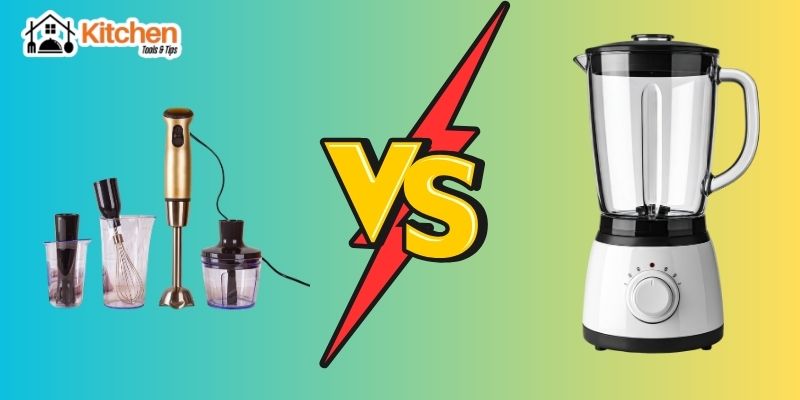
Choosing the right blender can transform your cooking experience. But should you buy a hand blender or a countertop blender?
Both tools blend ingredients, but they work differently. They serve different purposes in your kitchen. Understanding these differences helps you make the right choice.
This guide explains everything you need to know. You’ll learn what each blender does best. You’ll discover which one fits your cooking style.
What Is a Hand Blender?
A hand blender is a portable blending tool. People also call it an immersion blender or stick blender.
You hold it in your hand while blending. The blending blade sits at the bottom of a long shaft. You put this blade directly into your food or liquid.
Hand blenders work great for soups, sauces, and smoothies. You can blend right in the pot or bowl. No need to transfer hot soup to another container.
Popular brands include Braun, KitchenAid, and Cuisinart. Most models come with different attachments. You might get a whisk or a chopper with your purchase.
What Is a Countertop Blender?
A countertop blender sits on your kitchen counter. It has a base with a motor and a jar on top.
You put ingredients in the jar, close the lid, and press a button. The motor spins sharp blades at the bottom of the jar. These blades blend everything together.
Countertop blenders handle tough jobs. They crush ice, blend frozen fruit, and make nut butter. The powerful motor creates smooth textures.
Brands like Vitamix, Ninja, and Blendtec make popular models. Some blenders have preset programs for smoothies or soups.
Key Differences Between Hand Blenders and Countertop Blenders
Size and Storage
Hand blenders are small and slim. They fit in a kitchen drawer easily. You can store them with other utensils.
Countertop blenders take up more space. They need a permanent spot on your counter or in a cabinet. The jar and base make them bulky.
Power and Performance
Countertop blenders have stronger motors. They range from 500 to 1500 watts or more. This power crushes ice and blends tough ingredients.
Hand blenders have less power. Most range from 200 to 400 watts. They work well for soft foods and liquids.
Ease of Use
Hand blenders are quick to use. You grab them and start blending. No setup required.
Countertop blenders need assembly. You must attach the jar to the base. You need to pour ingredients into the jar first.
Cleaning
Hand blenders are easy to clean. You rinse the blade under running water. Some parts go in the dishwasher.
Countertop blenders need more cleaning steps. You must clean the jar, lid, and blade assembly. The base needs wiping down.
Price
Hand blenders cost less. Good models range from $30 to $100. Professional versions might cost $150.
Countertop blenders vary widely. Basic models start at $50. High-performance blenders like Vitamix can cost $300 to $600.
Pros and Cons of Hand Blenders
Advantages
Takes up little space. Perfect for small kitchens or limited storage.
Easy to control. You move the blender around to reach all ingredients.
Blend directly in pots. Make soup without transferring hot liquid.
Quick cleanup. Rinse and dry in seconds.
Affordable. Budget-friendly option for most people.
Versatile attachments. Many come with whisks and food processors.
Disadvantages
Less powerful. Cannot crush ice or blend frozen fruit well.
Manual effort required. You must hold the blender while it runs.
Can splatter. Moving the blender wrong causes mess.
Limited capacity. Best for small batches only.
Not ideal for thick mixtures. Struggles with nut butter or thick smoothies.
Pros and Cons of Countertop Blenders
Advantages
Very powerful. Handles ice, frozen fruit, and tough ingredients.
Hands-free operation. Just press a button and let it work.
Large capacity. Makes smoothies for the whole family.
Consistent results. Blends everything to the same texture.
Multiple settings. Control speed and blending time precisely.
Makes hot soup. Some models heat soup through friction.
Disadvantages
Takes up counter space. Needs a permanent home in your kitchen.
More expensive. Quality models cost significantly more.
Harder to clean. Multiple parts need washing.
Louder operation. The motor creates significant noise.
Cannot blend in pots. Must transfer food to the jar.
Overkill for small jobs. Too much setup for simple tasks.
Which Blender Should You Choose?
Choose a Hand Blender If:
You have a small kitchen with limited storage. Hand blenders fit anywhere.
You make soups and sauces often. Blend right in the pot for convenience.
You want quick and easy cleanup. Hand blenders save time.
You’re on a budget. Get quality performance without spending much.
You need something portable. Take it anywhere you cook.
Choose a Countertop Blender If:
You make smoothies daily. Countertop blenders create silky smooth drinks.
You blend frozen ingredients often. The power handles ice and frozen fruit.
You cook for a family. Large jars hold multiple servings.
You want hands-free operation. Set it and walk away.
You make nut butters or thick sauces. Strong motors handle dense mixtures.
You have counter space available. Keep it ready for daily use.
Can You Own Both?
Many home cooks own both blenders. Each serves different purposes.
Use your hand blender for quick tasks like pureeing soup or making salad dressing. Pull out your countertop blender for morning smoothies or crushing ice for margaritas.
Together, they cover all your blending needs. The investment makes sense if you cook regularly.
Conclusion
Hand blenders and countertop blenders both blend food. But they excel at different tasks.
Hand blenders offer convenience and portability. They work perfectly for soups, sauces, and small jobs. They cost less and store easily.
Countertop blenders provide power and capacity. They make perfect smoothies, crush ice, and handle tough ingredients. They take up more space and cost more.
Think about what you cook most often. Consider your kitchen size and budget. Match the blender to your lifestyle.
The right choice makes cooking easier and more enjoyable. Whether you pick a hand blender, a countertop blender, or both, you’ll wonder how you cooked without it.
Start with your most common cooking tasks. That’s the best way to decide which blender belongs in your kitchen.