
How to Clean Stainless Steel Mixing Bowls
Stainless steel mixing bowls are some of the most durable pieces of cookware you will ever own. But even the toughest bowl set needs proper care to stay in great shape. Without the right cleaning habits, you end up with water spots, stains, dull finishes, and even rust.
I have been cleaning and maintaining stainless steel kitchen utensils and bowls for years. I know what works and what causes damage. In this guide, I will show you exactly how to clean your stainless steel mixing bowls the right way. Whether you have a simple three-piece nesting bowl set or a full set of professional catering bowls, these methods apply to all of them.
Let us get started.
Why Stainless Steel Still Needs Proper Cleaning
Many people assume stainless steel cleans itself. It does not stain, rust, or absorb smells the way plastic does. So why does it need special care?
Here is the truth. Stainless steel is highly resistant, but it is not indestructible. Over time, improper cleaning leads to:
- Water spots and mineral deposits from tap water
- White haze from soap residue or hard water buildup
- Rainbow-colored discoloration from heat exposure
- Surface scratches from abrasive scrubbers
- Rust spots caused by prolonged contact with salt or acidic foods
All of these problems are preventable. And if they have already appeared on your bowls, most of them are reversible too. You just need to know the right approach.
What You Need Before You Start
You do not need expensive products to clean stainless steel well. Most of what you need is already in your kitchen.
Here is what I keep on hand:
- Dish soap (mild, not harsh)
- White vinegar
- Baking soda
- A soft sponge or cloth
- A microfiber towel for drying
- Olive oil or mineral oil for polishing
- Warm water
Avoid steel wool, harsh scrubbing pads, and bleach-based cleaners. These damage the surface and leave scratches that are hard to remove. A soft sponge does the job on almost every task.
Step-by-Step: Everyday Cleaning Method
For daily cooking and baking use, this simple method keeps your bowls clean and looking great.
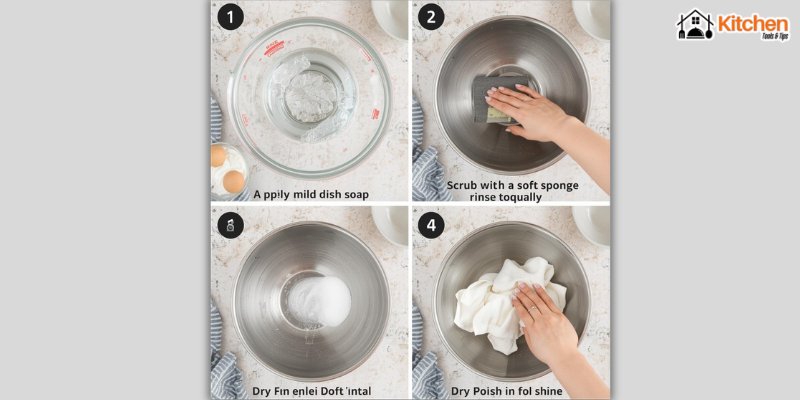
Step 1 — Rinse immediately after use
Do not let food dry and harden inside the bowl. Rinse it with warm water right after you finish using it. This takes ten seconds and prevents most stubborn stains from forming.
Step 2 — Add a small amount of dish soap
Apply a few drops of mild dish soap to a soft sponge. Work it into a light lather. You do not need a lot of soap to clean a stainless steel bowl effectively.
Step 3 — Wipe in the direction of the grain
Stainless steel has a grain, just like wood. Look closely at the surface of your bowl and you will see fine lines running in one direction. Always wipe in the same direction as those lines. Wiping against the grain causes tiny scratches that dull the finish over time.
Step 4 — Rinse thoroughly
Rinse the bowl completely under warm running water. Make sure no soap residue remains. Soap left on the surface dries into a white haze that is harder to remove later.
Step 5 — Dry immediately with a microfiber towel
This step is crucial. Do not air dry stainless steel bowls. Water sitting on the surface leaves mineral deposits and water spots. Dry the bowl right away with a clean microfiber towel for a streak-free finish.
That is the complete everyday method. Simple, fast, and effective.
How to Remove Water Spots and White Haze
Water spots are the most common complaint with stainless steel bowls. They come from the minerals in tap water that stay behind after the water evaporates.
Here is how to remove them:
- Pour a small amount of white vinegar onto a soft cloth
- Wipe the affected area in the direction of the grain
- Let the vinegar sit for one to two minutes
- Rinse the bowl with warm water
- Dry immediately with a microfiber towel
White vinegar dissolves mineral deposits quickly and safely. It does not harm the steel or affect the finish. I use this method once a week on all my cooking bowls to keep them spotless.
For stubborn haze, repeat the process twice. It always clears up.
How to Remove Food Stains and Discoloration
Sometimes food leaves behind stains, especially if you have been working with tomatoes, berries, turmeric, or acidic ingredients. Rainbow discoloration can also appear after heat exposure.
Use baking soda for both of these problems.
For food stains:
- Make a paste by mixing baking soda with a small amount of water
- Apply the paste to the stained area with a soft cloth
- Rub gently in the direction of the grain
- Let it sit for five minutes
- Rinse and dry thoroughly
For rainbow discoloration:
The same baking soda paste works here. Apply it to the discolored area, rub gently, and rinse clean. The discoloration usually lifts within one application.
Both methods are safe for all stainless steel bowl sets, including premium brands like KitchenAid mixer bowls, Buckingham catering bowls, and standard nesting bowl sets you pick up on Amazon or eBay.
How to Remove Rust Spots
Stainless steel is rust-resistant, not rust-proof. Rust spots can appear if the bowl is left wet for long periods, stored in contact with other rusting metal, or exposed to salt or acidic food for too long.
Here is how to treat rust spots:
- Make a thick paste of baking soda and white vinegar
- Apply it directly to the rust spot
- Let it sit for ten to fifteen minutes
- Scrub gently with a soft sponge in the direction of the grain
- Rinse thoroughly and dry immediately
For older or deeper rust spots, repeat the process two or three times. If rust has penetrated deeply into the surface, the bowl may be too far gone to save. In that case, replacing it is the better option.
Prevention is always easier than treatment. Dry your bowls right after washing and never store them wet.
Cleaning the Lids of Your Bowl Set
Most modern mixing bowl sets include lids with each bowl. These lids are usually made from plastic or silicone. They need a different approach than the steel bowls.
Here is how to clean them properly:
- Wash lids by hand with warm water and mild dish soap
- Use a soft sponge to avoid scratching the surface
- Pay attention to the edges and grooves where food gets trapped
- Rinse thoroughly to remove all soap residue
- Air dry or towel dry before placing back on the bowl
Do not use abrasive scrubbers on plastic lids. They scratch easily and the scratches trap bacteria. Most lids are dishwasher safe, but hand washing keeps them in better shape for longer.
A clean lid means a clean seal. A dirty lid can transfer old food smells into freshly prepared food, which is something nobody wants.
Dishwasher vs. Hand Washing: Which Is Better?
Most stainless steel mixing bowls are dishwasher safe. But hand washing is always the better option if you want to keep your bowls in top condition for years.
Here is why:
- Dishwasher detergents are often harsh and can dull the finish over time
- High heat in the dishwasher can cause discoloration
- Water spots are more likely when bowls air dry in the machine
- Nesting bowls can trap water between them if stacked inside the dishwasher
That said, occasional dishwasher use will not ruin a quality bowl set. If you are using professional catering bowls or commercial cookware from brands like Buckingham, they are designed to handle heavy use including machine washing.
For everyday home bowls, hand washing takes less than two minutes per bowl. It keeps them cleaner and looking better for longer.
How to Polish Stainless Steel Mixing Bowls
Once your bowls are clean and dry, a quick polish restores that bright finish and adds a layer of protection.
Here is how I do it:
- Put a few drops of olive oil or mineral oil on a soft cloth
- Rub it over the entire surface of the bowl
- Buff it off with a clean dry cloth
- The bowl will have a subtle shine and a thin protective layer
This does not make the bowl greasy. The thin layer of oil fills microscopic scratches and slows down the buildup of water spots. I do this about once a month on all my kitchen bowls and the difference is noticeable.
You can also use dedicated stainless steel polish, which is widely available on Amazon and in most kitchen stores. It works in the same way as the oil method but dries faster.
Storing Your Bowls the Right Way
Proper storage protects your bowls between uses and prevents damage.
Follow these simple rules:
- Always store bowls completely dry
- Nest them inside each other to save space
- Place a soft cloth or paper towel between nesting bowls to prevent scratching
- Store lids separately or place them loosely on top of the smallest bowl
- Keep your bowl set away from other metal cookware that could scratch the surface
- Never store bowls in a damp wash basin or near a sink where water can splash on them
These habits take no extra time but make a real difference in how long your bowls stay in great condition.
A Note on Professional and Commercial Bowls
If you use professional catering bowls or commercial-grade cookware in a restaurant or catering setting, the same cleaning methods apply. Brands like Buckingham make heavy-duty stainless steel catering bowls that hold up to intense daily use.
For high-volume cleaning, use a commercial dish soap and always rinse thoroughly. Mineral buildup happens faster with high usage, so apply the white vinegar treatment more frequently. Weekly polishing also helps maintain the appearance of professional kitchen utensils in busy environments.
If you source your catering bowls from eBay or Amazon, check the steel grade before buying. Higher-grade steel cleans more easily and resists stains better than lower-grade alternatives.
Frequently Asked Questions
Can I put stainless steel mixing bowls in the dishwasher? Yes, most stainless steel mixing bowls are dishwasher safe. However, hand washing is better for maintaining the finish. Dishwasher detergents can dull the surface over time, and water spots are more likely when bowls air dry in the machine. Hand washing takes less than two minutes and keeps your bowl set looking great for longer.
Why do my stainless steel bowls have white spots after washing? White spots come from the minerals in tap water. When water evaporates, it leaves mineral deposits behind. Always dry your bowls immediately with a microfiber towel after washing. To remove existing spots, wipe the surface with white vinegar and rinse thoroughly.
How do I remove rust from a stainless steel bowl? Make a paste from baking soda and white vinegar. Apply it to the rust spot and leave it for ten to fifteen minutes. Scrub gently with a soft sponge in the direction of the grain, then rinse and dry immediately. Repeat if needed for stubborn spots.
Can I use bleach to clean my stainless steel mixing bowls? No. Bleach damages stainless steel and can cause pitting and corrosion over time. Use mild dish soap, white vinegar, or baking soda instead. These are safe, effective, and will not harm the surface of your bowls or cookware.