
Raw meat sits in millions of kitchens every day. But many people don’t know how to handle it safely. This guide shows you simple steps to keep your family safe from foodborne illness.
Why Safe Meat Handling Matters
Raw meat carries harmful bacteria like Salmonella, E. coli, and Campylobacter. These germs can make you very sick. They cause food poisoning that leads to stomach pain, vomiting, and diarrhea.
The CDC reports that unsafe food handling causes 48 million illnesses each year in the United States. Many of these cases come from improper meat handling at home.
Safe practices protect you and your loved ones. They take just a few extra minutes but prevent serious health problems.
Before You Start: Preparation Steps
Wash Your Hands
Scrub your hands with soap and warm water for at least 20 seconds. Do this before and after touching raw meat. This simple step stops bacteria from spreading.
Gather Your Tools
You need:
- A clean cutting board (preferably plastic or glass)
- Sharp knife
- Separate plates for raw and cooked meat
- Paper towels
- Sanitizing spray or bleach solution
Create a Safe Workspace
Clear your counter space. Remove items that don’t need to be near raw meat. This reduces the risk of cross-contamination.
Safe Handling Steps for Raw Meat
Step 1: Keep Meat Cold
Take meat from the refrigerator only when you’re ready to use it. Bacteria multiply fast at room temperature. Don’t let raw meat sit out for more than two hours (one hour if the room is hot).
Step 2: Use Separate Cutting Boards
Never use the same cutting board for raw meat and fresh vegetables. Buy color-coded boards if possible. Red for meat, green for vegetables works well.
This prevents harmful bacteria from raw meat touching foods you eat raw.
Step 3: Don’t Wash Raw Meat
This surprises many people. Don’t rinse raw chicken, beef, or pork under water. Washing splashes bacteria all over your sink, counters, and nearby items.
The USDA confirms that cooking kills bacteria. Washing doesn’t help and actually spreads germs.
Step 4: Handle with Care
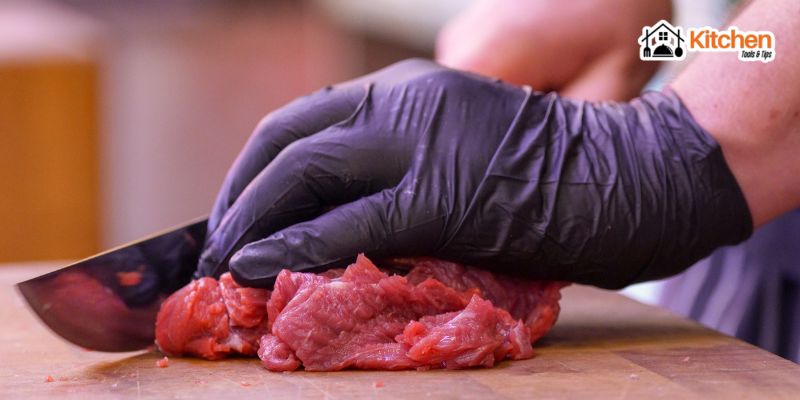
Touch raw meat as little as possible. Use tongs or forks when you can. If you touch it with bare hands, wash immediately after.
Don’t touch your phone, face, or other items until you’ve washed your hands.
Step 5: Separate Raw from Cooked
Never put cooked meat back on the plate that held it raw. Use a fresh, clean plate. This rule applies to marinades too. Don’t reuse marinade that touched raw meat unless you boil it first.
Cleaning and Sanitizing After
Clean Immediately
Don’t wait to clean up. Wash all surfaces that touched raw meat right away.
Wash Cutting Boards and Utensils
Scrub cutting boards, knives, and other tools with hot, soapy water. Use a dishwasher if you have one. The high heat kills bacteria better than hand washing.
For extra safety, sanitize cutting boards with a bleach solution. Mix one tablespoon of bleach with one gallon of water. Spray it on, let it sit for a few minutes, then rinse.
Wipe Down Counters
Clean all counter surfaces with hot, soapy water. Then use a sanitizing spray or the bleach solution. Don’t forget handles, faucets, and the sink.
Wash Towels and Sponges
Kitchen towels that touched raw meat should go straight to the laundry. Wash them in hot water.
Sponges harbor bacteria. Microwave damp sponges for one minute or run them through the dishwasher. Replace them often.
Common Mistakes to Avoid
Mistake 1: Using the Same Plate
Many cooks put cooked meat on the same plate that held it raw. This transfers bacteria back onto safe food.
Mistake 2: Not Checking Temperature
Use a meat thermometer. Different meats need different internal temperatures:
- Chicken and turkey: 165°F
- Ground beef: 160°F
- Beef steaks and roasts: 145°F
- Pork: 145°F
Visual checks aren’t reliable. Only a thermometer confirms meat is safe.
Mistake 3: Thawing on the Counter
Never thaw meat at room temperature. Bacteria grow rapidly in the “danger zone” between 40°F and 140°F.
Safe thawing methods:
- In the refrigerator (takes longest but safest)
- In cold water (change water every 30 minutes)
- In the microwave (cook immediately after)
Mistake 4: Overcrowding the Refrigerator
Air needs to circulate in your fridge. Pack it too full and the temperature rises. This lets bacteria grow on raw meat.
Storage Tips for Raw Meat
Refrigerator Storage
Store raw meat on the bottom shelf. This prevents drips from contaminating other foods below.
Keep meat in sealed containers or plastic bags. This contains any leaks.
Use refrigerated meat within:
- Ground meat: 1-2 days
- Chicken and turkey: 1-2 days
- Beef, pork, and lamb: 3-5 days
Freezer Storage
Freeze meat you won’t use quickly. Wrap it tightly in freezer paper or heavy-duty aluminum foil.
Label packages with the date. Use frozen meat within:
- Ground meat: 3-4 months
- Chicken parts: 9 months
- Beef roasts: 12 months
Check Your Fridge Temperature
Keep your refrigerator at 40°F or below. Keep your freezer at 0°F or below. Use a thermometer to check.
Conclusion
Safe meat handling isn’t hard. It just takes attention and good habits. Wash your hands often. Use separate cutting boards. Clean surfaces right away. Store meat at safe temperatures.
These simple steps protect your family from foodborne illness. They become automatic with practice. Start using them today for a safer, healthier kitchen.
Remember: when in doubt, throw it out. If meat smells bad, looks slimy, or has been out too long, don’t risk it. Your health is worth more than the cost of replacing it.