
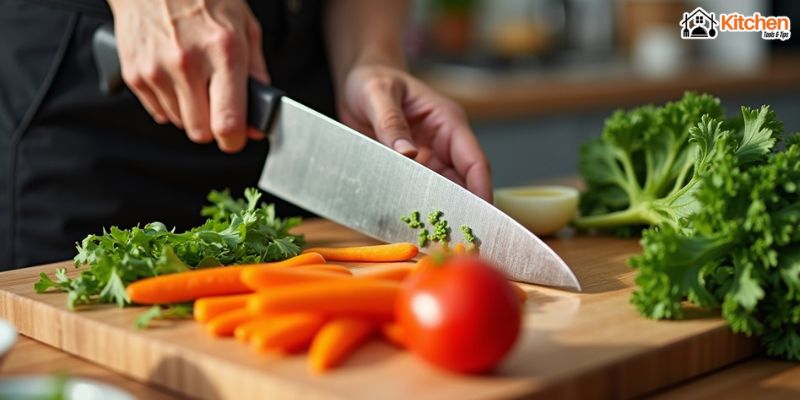
Chopping vegetables safely is a basic cooking skill everyone should master. Whether you’re new to cooking or want to improve your technique, learning proper knife skills protects your fingers and makes meal prep faster and more enjoyable.
Why Knife Safety Matters
Kitchen knife accidents send thousands of people to emergency rooms each year. Most of these injuries happen at home during everyday cooking tasks. The good news? Almost all knife accidents are preventable when you use the right techniques.
A sharp knife is actually safer than a dull one. Dull knives slip off vegetables and require more force, which increases your risk of injury. Sharp knives cut cleanly with less pressure, giving you better control.
Choosing the Right Knife
Not all knives work the same for chopping vegetables. Here’s what you need:
Chef’s Knife: This is your go-to tool. An 8-inch chef’s knife handles most vegetables with ease. The wide blade helps you scoop up chopped pieces too.
Paring Knife: Perfect for small jobs like peeling garlic or trimming stems.
Serrated Knife: Best for tomatoes and other soft vegetables with tough skins.
For beginners, start with a good-quality chef’s knife. You don’t need an expensive set. One sharp, well-maintained knife beats a drawer full of dull ones.
Essential Safety Tips Before You Start
Set yourself up for success with these simple steps:
Use a stable cutting board. Place a damp towel under your board to stop it from sliding. Wooden or plastic boards work best.
Keep your workspace clear. Remove clutter from your counter. You need room to work safely.
Dry your hands and knife handle. Wet hands or handles cause slips.
Sharpen your knife regularly. A sharp knife requires less force and gives you better control.
Wear closed-toe shoes. If you drop a knife, shoes protect your feet. Never cook barefoot.
Focus on the task. Put your phone away and avoid distractions while using sharp knives.
The Proper Way to Hold a Knife
Your grip affects both safety and control. Follow these steps:
- Hold the knife handle with your dominant hand
- Place your thumb on one side of the blade, just past the handle
- Curl your index finger around the other side
- Wrap your remaining three fingers around the handle
- Keep a firm but relaxed grip
This grip, called the “pinch grip,” gives you maximum control. Your thumb and finger stabilize the blade while your other fingers provide power.
The Claw Grip Technique
This technique protects your fingers from cuts. Master it before you start chopping:
- Place the vegetable on your cutting board
- Make a claw with your non-knife hand
- Curl your fingertips inward
- Rest your knuckles against the knife blade
- Use your knuckles as a guide for the knife
Your fingertips stay tucked safely away from the blade. The flat side of the knife rests against your knuckles, which guide each cut. As you chop, move your hand backward slowly to adjust the slice thickness.
Step-by-Step Vegetable Chopping Guide
Preparing Round Vegetables (Onions, Tomatoes)
- Cut the vegetable in half lengthwise
- Place the flat side down on the board
- This creates a stable base that won’t roll
Chopping Technique
- Start with the knife tip on the cutting board
- Keep the tip down as you lift the handle
- Rock the blade forward to make each cut
- Move the blade sideways for the next cut
- Keep your movements smooth and controlled
Speed Comes With Practice
Don’t rush. Focus on safety and proper form first. Speed develops naturally as you practice the correct technique. Fast chopping with poor form leads to accidents.
Handling Long Vegetables (Carrots, Celery)
- Cut into manageable lengths first (3-4 inches)
- For round vegetables like carrots, slice lengthwise to create a flat side
- Place the flat side down for stability
- Chop as needed using the rocking motion
Common Mistakes to Avoid
Rushing the process: Take your time. Accidents happen when you hurry.
Using a dull knife: Sharpen your knife every few weeks. Dull knives require more force and slip easily.
Chopping in the air: Always keep the knife tip on the cutting board. Never chop with the entire blade lifting off the surface.
Looking away: Keep your eyes on the knife and your fingers at all times.
Trying to catch a falling knife: If you drop a knife, step back and let it fall. Never try to catch it.
Leaving knives in the sink: Wash knives immediately and store them properly. Hidden knives in soapy water cause accidents.
Cutting toward yourself: Always cut away from your body, never toward it.
Practice Makes Perfect
Start with soft vegetables like zucchini or cucumber. These are easier to cut and help you build confidence. Once you master the basic technique, move to harder vegetables like carrots and potatoes.
Practice the claw grip until it feels natural. It might seem awkward at first, but this technique has protected professional chefs for generations.
Conclusion
Safe vegetable chopping starts with the right tools, proper technique, and focused attention. Use a sharp chef’s knife, master the pinch grip and claw technique, and never rush the process. These simple practices prevent injuries and make cooking more enjoyable.
Remember that everyone started as a beginner. With practice, safe chopping becomes second nature. Take your time, focus on proper form, and enjoy the process of preparing fresh, healthy meals for yourself and your loved ones.
Start practicing today with just one vegetable. Your confidence and skills will grow with every meal you prepare.