
Cutting boards see a lot of action in your kitchen. They touch raw meat, fresh vegetables, and countless other foods every day. Without proper cleaning, these kitchen tools can harbor harmful bacteria like E. coli and Salmonella.
Learning how to sanitize cutting boards correctly protects your family from foodborne illness. This guide shows you simple, effective ways to keep your boards clean and safe.
Why Sanitizing Cutting Boards Matters
Your cutting board can become a breeding ground for bacteria. Every time you cut raw chicken or chop vegetables, tiny food particles get stuck in the surface. These particles feed bacteria that can make you sick.
Cross-contamination is a real risk. If you cut raw meat on a board and then slice bread without cleaning it, bacteria transfers to your food. Proper sanitizing kills these germs and keeps your kitchen safe.
The USDA recommends sanitizing cutting boards after each use, especially when working with raw meat, poultry, or seafood.
Daily Cleaning vs. Deep Sanitizing
Daily cleaning removes visible dirt and food debris. Wash your board with hot, soapy water after each use. Scrub both sides thoroughly.
Deep sanitizing kills bacteria you cannot see. Do this at least once a week or after cutting raw meat. Sanitizing goes beyond basic cleaning to eliminate harmful germs.
How to Sanitize Plastic Cutting Boards
Plastic boards are the easiest to sanitize. They can handle harsh chemicals and high heat.
Method 1: Bleach Solution
- Mix one tablespoon of unscented liquid chlorine bleach with one gallon of water
- Pour the solution over the board or soak it completely
- Let it sit for several minutes
- Rinse thoroughly with clean water
- Air dry or pat dry with clean paper towels
Method 2: Dishwasher
- Place the plastic board in your dishwasher
- Run a hot water cycle with heated dry
- The high temperature kills bacteria effectively
- Remove and store when completely dry
Method 3: Hydrogen Peroxide
- Pour 3% hydrogen peroxide directly onto the board
- Spread it across the entire surface
- Let it sit for 10 minutes
- Rinse with water and dry
How to Sanitize Wood Cutting Boards
Wood boards need gentler care. Never soak them in water or put them in the dishwasher. The wood can warp, crack, or split.
Method 1: White Vinegar
- Wash the board with hot, soapy water first
- Pour undiluted white vinegar over the surface
- Let it sit for 5-10 minutes
- Rinse and dry immediately with a clean towel
- Stand it upright to air dry completely
Method 2: Baking Soda Scrub
- Sprinkle baking soda generously over the board
- Cut a lemon in half and use it to scrub the surface
- The combination creates a natural sanitizing paste
- Let it sit for 5 minutes
- Rinse well and dry thoroughly
Method 3: Salt Treatment
- Cover the board with coarse salt
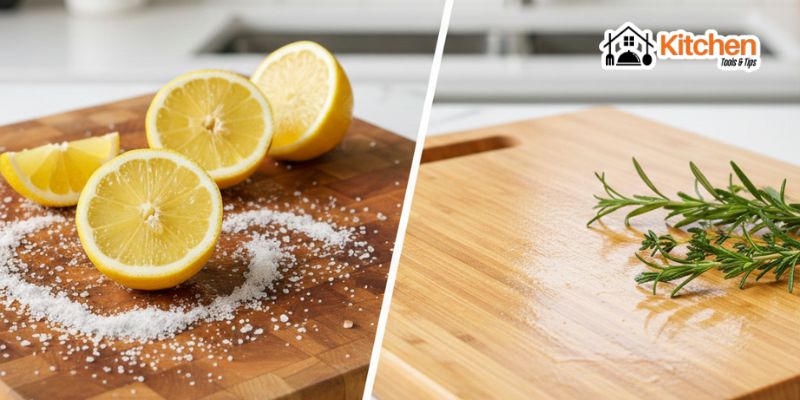
- Rub with half a lemon
- Let it sit for several minutes
- Scrape off the salt mixture
- Rinse and dry completely
Important: After sanitizing wood boards, apply food-grade mineral oil once they’re dry. This maintains the wood and prevents cracking.
How to Sanitize Bamboo Cutting Boards
Bamboo boards follow similar rules to wood boards. They’re naturally antimicrobial but still need regular sanitizing.
- Wash with hot, soapy water
- Use white vinegar or the baking soda-lemon method
- Rinse thoroughly
- Dry immediately and completely
- Apply mineral oil monthly
Never put bamboo boards in the dishwasher or soak them in water.
Natural Sanitizing Methods
Many people prefer natural cleaning solutions. These work well for regular maintenance.
Lemon and Salt
Lemons contain citric acid that kills bacteria naturally. Combined with salt’s abrasive power, this duo sanitizes effectively.
White Vinegar
Vinegar kills 99% of bacteria, 82% of mold, and 80% of viruses. It’s safe for all board types when used correctly.
Hydrogen Peroxide
This natural sanitizer breaks down into water and oxygen. It’s safe and effective for all cutting board materials.
Steam Cleaning
For plastic boards, hold them over boiling water or use a steam cleaner. The high heat kills germs without chemicals.
When to Replace Your Cutting Board
Even with proper care, cutting boards don’t last forever. Replace your board when:
- Deep grooves and cuts appear that trap food
- Cracks develop in the surface
- The board warps or becomes uneven
- Stains and odors won’t come out
- The material feels soft or spongy
Plastic boards typically last 1-5 years. Wood and bamboo boards can last 5-10 years or longer with proper care.
Quick Tips to Keep Boards Clean
Use separate boards for raw meat and ready-to-eat foods. Color-coded boards help prevent cross-contamination.
Clean immediately after each use. Don’t let food sit on the board.
Dry completely before storing. Moisture encourages bacterial growth.
Store properly by standing boards upright. This allows air circulation on all sides.
Remove odors by rubbing with lemon or baking soda paste.
Sanitize weekly at minimum, or after every raw meat use.
Check for damage regularly and replace worn boards.
Conclusion
Sanitizing cutting boards is a simple but crucial kitchen task. Whether you use plastic, wood, or bamboo, regular cleaning and deep sanitizing keep your food preparation safe.
Choose the method that works best for your board type. Make sanitizing a habit, especially after handling raw meat or poultry. With these easy techniques, you can cook with confidence knowing your cutting boards are clean and safe.
Remember: a clean cutting board is your first defense against foodborne illness in the kitchen.