
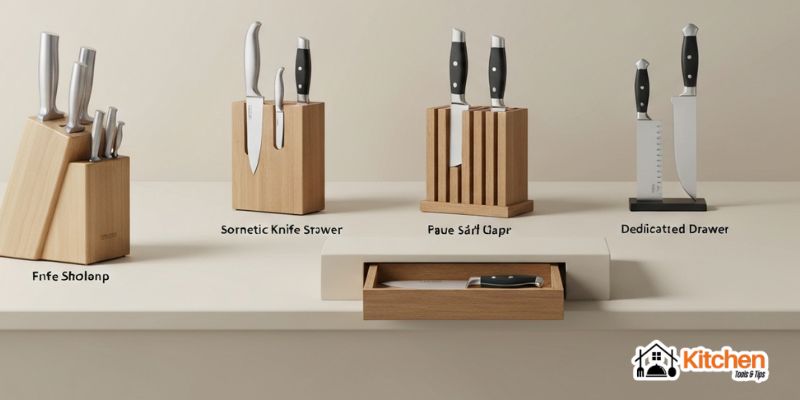
Storing knives properly keeps your family safe and your blades sharp. Every year, thousands of people get cut by poorly stored knives. The good news? You can prevent these accidents with the right storage method.
This guide shows you seven proven ways to store knives safely in your home.
Why Safe Knife Storage Matters
Proper knife storage protects you in three important ways:
Safety: Loose knives in drawers cause cuts when you reach for other items. Children and guests face higher risks.
Blade quality: Knives tossed in drawers bump against other utensils. This damages the sharp edge and shortens blade life.
Organization: Good storage keeps your kitchen tidy. You’ll find the right knife faster when cooking.
7 Best Methods to Store Knives Safely
1. Knife Blocks
Knife blocks sit on your countertop and hold multiple knives in vertical slots.
Pros:
- Easy access while cooking
- Protects blade edges
- No installation needed
- Keeps knives visible
Cons:
- Takes up counter space
- Slots can harbor bacteria
- May not fit all knife sizes
Best for: Home cooks with counter space who use knives daily.
Safety tip: Place the block away from the counter edge. Keep it out of children’s reach.
2. Magnetic Knife Strips
These wall-mounted strips use strong magnets to hold knives against the wall.
Pros:
- Saves counter and drawer space
- Shows all knives at once
- Easy to clean
- Works with any knife size
Cons:
- Requires wall installation
- Blades stay exposed
- Not ideal near the stove (heat damage)
Best for: Small kitchens or people who want a modern look.
Safety tip: Install the strip at least 4 feet high. This keeps knives away from small children.
3. Drawer Organizers
In-drawer knife trays have individual slots that keep blades separated.
Pros:
- Knives stay hidden and protected
- Saves counter space
- Safe from children
- Protects blade edges
Cons:
- Needs a deep drawer
- Limited slots per organizer
- Takes up drawer space
Best for: Families with young children who prefer hidden storage.
Safety tip: Choose an organizer with secure slots. Blades should not move when you open the drawer.
4. Knife Sheaths and Guards
Plastic or leather covers slip over individual knife blades.
Pros:
- Affordable option
- Portable for travel
- Protects blades in any drawer
- Works with existing storage
Cons:
- Must put sheath on each time
- Can slip off if not fitted properly
- Doesn’t organize multiple knives
Best for: Renters or people who want flexible storage.
Safety tip: Make sure the sheath fits snugly. Loose sheaths can fall off and expose the blade.
5. In-Drawer Knife Docks
These angled blocks sit inside drawers and hold knives upright.
Pros:
- Keeps knives hidden
- Maximizes drawer space
- Protects blade edges
- Safe from children
Cons:
- Needs a deep drawer
- More expensive than trays
- Limited knife capacity
Best for: People who want drawer storage with blade protection.
Safety tip: Secure the dock so it doesn’t slide when you open the drawer.
6. Wall-Mounted Knife Racks
Wooden or acrylic racks attach to walls and display knives horizontally.
Pros:
- Saves all drawer and counter space
- Decorative storage option
- Easy knife access
- Good air circulation
Cons:
- Requires wall mounting
- Knives stay exposed
- Dust can accumulate
Best for: Serious cooks who want quick access and don’t mind exposed blades.
Safety tip: Mount racks high and away from the main traffic area in your kitchen.
7. Knife Rolls for Long-Term Storage
Canvas or leather rolls wrap knives individually and tie closed.
Pros:
- Great for seasonal storage
- Protects knives during moves
- Portable solution
- Prevents blade damage
Cons:
- Not practical for daily use
- Knives stay hidden from view
- Takes time to roll and unroll
Best for: Professional chefs, travelers, or storing extra knives.
Safety tip: Store knife rolls in a high cabinet away from children.
Essential Safety Tips for Knife Storage
Follow these rules no matter which storage method you choose:
Store knives separately: Never toss knives loose in drawers with other utensils.
Keep blades pointing down or back: This reduces cut risk when grabbing knives.
Clean before storing: Wash and dry knives immediately. Food residue attracts bacteria.
Place storage wisely: Keep knives away from the stove, sink edge, and high-traffic areas.
Teach family members: Show everyone in your home where knives are stored and how to handle them.
Use childproof locks: Add locks to drawers or cabinets if you have young children.
Check storage regularly: Inspect blocks, strips, and organizers for damage or looseness.
Common Knife Storage Mistakes to Avoid
Mistake 1: Throwing knives in a drawer without protection. This damages blades and causes injuries.
Mistake 2: Storing wet knives. Moisture leads to rust and bacterial growth.
Mistake 3: Placing storage too close to the counter edge. Knives can fall or get knocked over.
Mistake 4: Using storage that doesn’t fit your knives. Forcing knives into tight slots damages them.
Mistake 5: Ignoring child safety. Even careful adults make mistakes when rushed.
Choosing the Right Storage for Your Home
Consider these factors when picking a storage method:
Kitchen size: Small kitchens benefit from magnetic strips or drawer organizers.
Family composition: Homes with children need locked drawers or high-mounted options.
Knife collection size: Large collections need multiple storage solutions.
Budget: Knife sheaths and drawer trays cost less than custom blocks or magnetic strips.
Usage frequency: Daily cooks want easy access. Occasional users can choose drawer storage.
Final Thoughts
Safe knife storage protects your family and preserves your investment in quality knives. Choose a method that fits your kitchen layout, family needs, and cooking habits.
Start with one storage solution and add more as your knife collection grows. The most important thing is keeping blades protected and out of harm’s way.
Your kitchen will be safer, more organized, and ready for any cooking task.