
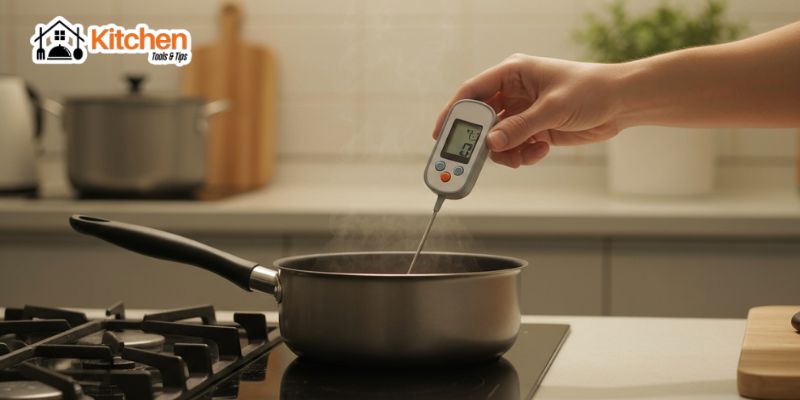
A kitchen thermometer is your best friend for cooking safe, delicious food. Many home cooks skip this tool, but it prevents foodborne illness and stops you from overcooking expensive meat. This guide shows you exactly how to use kitchen thermometers the right way.
Why You Need to Use a Kitchen Thermometer
Guessing if food is done can make you sick or ruin your meal. The USDA reports that improper cooking causes thousands of food poisoning cases each year. Color and texture alone don’t tell you if harmful bacteria are dead.
A food thermometer gives you the exact internal temperature. This means safer food for your family and perfectly cooked meals every time.
Types of Kitchen Thermometers You Can Use
Instant-Read Thermometers
These work fast. You insert the probe into food and get a reading in 2-10 seconds. They’re perfect for checking steaks, chicken breasts, and fish. Digital instant-read models are the most popular choice for home cooks.
Dial Thermometers
These have a round face with a needle. They take longer to read (15-20 seconds) but cost less. Make sure to calibrate them regularly for accuracy.
Probe Thermometers with Cords
You insert the probe into meat before cooking. The cord connects to a display outside your oven. This lets you monitor temperature without opening the oven door. Great for roasts and whole turkeys.
Infrared Thermometers
These measure surface temperature only. They work well for griddles and pans but not for checking if meat is safely cooked inside.
How to Use a Kitchen Thermometer: Step-by-Step Guide
Step 1: Clean Your Thermometer
Wash the probe with hot, soapy water before each use. Dry it completely. This prevents cross-contamination between raw and cooked foods.
Step 2: Insert the Probe Correctly
This is the most important step. Insert the thermometer into the thickest part of the food. Avoid bones, fat, and gristle because they give false readings.
For chicken or turkey, check the innermost part of the thigh and wing, plus the thickest part of the breast.
For hamburgers and meatballs, insert the probe sideways into the center.
For thin foods like chicken breasts or pork chops, insert the probe from the side to reach the center.
Step 3: Wait for an Accurate Reading
Give your thermometer time to stabilize. Instant-read models take just seconds. Dial thermometers need 15-20 seconds. Don’t pull it out too quickly or you’ll get the wrong number.
Step 4: Read and Compare to Safe Temperatures
Check if your reading matches the safe internal temperature for that food. If it’s lower, keep cooking. If it’s right, your food is done.
Step 5: Clean Again After Use
Wash the probe thoroughly with hot, soapy water after touching raw or cooked food. This step prevents bacteria from spreading.
Safe Internal Temperatures for Common Foods
Use these USDA-recommended temperatures:
Poultry
- Whole chicken or turkey: 165°F (74°C)
- Chicken breasts, thighs, wings: 165°F (74°C)
- Ground chicken or turkey: 165°F (74°C)
Beef, Pork, Lamb
- Steaks and roasts: 145°F (63°C) with 3-minute rest
- Ground beef, pork, lamb: 160°F (71°C)
- Pork chops: 145°F (63°C) with 3-minute rest
Seafood
- Fish and shellfish: 145°F (63°C)
- Shrimp, lobster, crab: Cook until flesh is opaque
Other Foods
- Eggs and egg dishes: 160°F (71°C)
- Leftovers and casseroles: 165°F (74°C)
The rest time matters for steaks and roasts. During this 3-minute wait, the temperature stays constant or rises, killing more bacteria.
Common Mistakes When Using Kitchen Thermometers
Mistake 1: Not Inserting Deep Enough
If your probe only goes into the surface, you’ll get a false high reading. Always reach the center of the thickest part.
Mistake 2: Touching Bone or Pan
Bones conduct heat differently than meat. Metal pans are even hotter. Both give you wrong numbers. Keep the probe in the meat only.
Mistake 3: Checking Temperature Too Early
Let food cook longer before you start checking. Opening the oven repeatedly drops the temperature and increases cooking time.
Mistake 4: Using a Broken Thermometer
Test your thermometer’s accuracy monthly. Put it in ice water (should read 32°F) or boiling water (should read 212°F at sea level). If it’s off by more than 2 degrees, replace it or calibrate it.
Mistake 5: Only Checking One Spot
Large items like whole turkeys need multiple checks. Test the thickest part of each breast and both thighs to ensure the entire bird is safe.
How to Clean and Maintain Your Kitchen Thermometer
Proper care makes your thermometer last longer and work accurately.
After Each Use:
- Wash the probe stem with hot, soapy water
- Rinse thoroughly
- Dry completely before storing
- Never submerge the digital display in water
Monthly Maintenance:
- Test accuracy in ice water or boiling water
- Replace the battery if readings are slow or dim
- Check for cracks or damage to the probe
Storage:
- Keep in a protective case if provided
- Store in a dry drawer away from heat
- Don’t store with the probe tip touching other utensils
Tips for Better Results with Your Kitchen Thermometer
Let meat rest after cooking. Steaks and roasts continue cooking slightly after you remove them from heat. This is called carryover cooking. Remove them when they’re 5 degrees below your target.
Use your thermometer for more than meat. Check bread (should reach 190-200°F inside), candy (for perfect fudge), and even baby bottles.
Invest in quality. A good digital instant-read thermometer costs $20-40 and lasts years. Cheap models break quickly and give inconsistent readings.
Keep a temperature chart handy. Stick a reference guide on your fridge until you memorize the key numbers.
Final Thoughts on Using Kitchen Thermometers
Using a kitchen thermometer properly is simple once you practice. Insert it in the right spot, wait for an accurate reading, and compare to safe temperatures. This small step protects your health and improves your cooking.
Don’t trust your eyes or cooking times alone. Every stove, oven, and cut of meat is different. A thermometer removes the guesswork and gives you confidence in the kitchen.
Start using your food thermometer today. Your family will eat safer meals, and you’ll become a better cook in the process.