
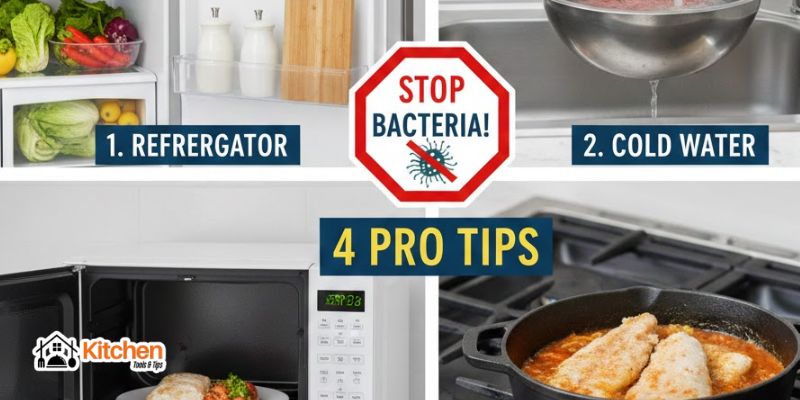
Thawing frozen food the wrong way can make you sick. Bacteria grow fast when food sits at room temperature. This guide shows you safe methods to defrost meat, poultry, seafood, and other frozen items.
Why Safe Thawing Matters
Frozen food seems harmless. But thawing it incorrectly creates perfect conditions for bacteria to multiply. Harmful bacteria like Salmonella and E. coli can double every 20 minutes in the “danger zone.”
The Centers for Disease Control and Prevention reports that 48 million Americans get food poisoning each year. Many cases start with improper thawing.
Understanding the Danger Zone
The danger zone is any temperature between 40°F and 140°F. Bacteria thrive in this range.
When frozen food thaws on your kitchen counter, the outside reaches dangerous temperatures while the inside stays frozen. This creates a breeding ground for harmful microorganisms.
The U.S. Department of Agriculture and Food and Drug Administration recommend specific thawing methods to keep food out of the danger zone.
4 Safe Ways to Thaw Frozen Food
1. Refrigerator Thawing (The Best Method)
This method is the safest but takes the longest.
How it works:
Place frozen food on a plate or in a container. Put it on the bottom shelf of your refrigerator. Let it thaw slowly at 40°F or below. Wait 24 hours for every 5 pounds of food.
Thawing times:
- Ground meat: 24 hours
- Chicken breasts: 24 hours
- Whole turkey: 24 hours per 4-5 pounds
- Roasts: 3-5 hours per pound
- Seafood: 12-24 hours
Benefits:
This method keeps food at safe temperatures throughout the process. You can refreeze the food if your plans change. It maintains food quality and texture better than other methods.
Pro tip: Once thawed in the fridge, ground meat stays safe for 1-2 days. Poultry and seafood last 1-2 days. Red meat lasts 3-5 days.
2. Cold Water Thawing (The Faster Method)
Need your food thawed quicker? Cold water works well.
How it works:
Keep food in leak-proof plastic packaging. Submerge in cold tap water. Change the water every 30 minutes. Allow 30 minutes per pound.
Important rules:
Never use warm or hot water. Always keep the package sealed. Cook immediately after thawing. Don’t refreeze without cooking first.
Best for:
- Chicken pieces: 2-3 hours
- Small roasts: 3-4 hours
- One-pound packages: 30 minutes to 1 hour
- Steaks and chops: 1-2 hours
This method requires attention but works much faster than refrigerator thawing. The constant cold water temperature keeps bacteria from growing.
3. Microwave Thawing (The Quick Method)
Your microwave can thaw food in minutes.
How it works:
Remove all packaging and metal. Use the defrost setting. Rotate food regularly. Check frequently to prevent cooking edges.
Critical warning: Cook microwave-thawed food immediately. Some areas may start cooking during the defrost cycle. This creates warm spots where bacteria multiply fast.
Best for:
- Single portions
- Ground meat
- Chicken breasts
- Emergency situations
- Small items under 2 pounds
Always check your microwave manual for specific defrost instructions. Different models have different power levels.
4. Cooking from Frozen (No Thawing Needed)
You can cook many foods directly from frozen.
How it works:
Add 50% more cooking time. Use lower heat to ensure even cooking. Check internal temperature with a food thermometer.
Safe internal temperatures:
- Poultry: 165°F
- Ground meat: 160°F
- Beef, pork, lamb: 145°F
- Fish: 145°F
Best for:
- Vegetables
- Frozen dinners
- Chicken breasts
- Hamburger patties
- Fish fillets
This method works great for thin cuts. Thick roasts and whole birds need thawing first for even cooking.
Unsafe Thawing Methods to Avoid
Counter Thawing
Never leave frozen food on the kitchen counter. Room temperature is perfect for bacterial growth. Even if the center stays frozen, the outside reaches dangerous temperatures within 2 hours.
Hot Water Thawing
Hot water cooks the outside while leaving the inside frozen. This uneven thawing promotes bacteria and ruins texture.
Leaving in the Car
Your car interior gets very warm. Bacteria multiply rapidly in these conditions. Always bring frozen food straight home from the store.
Thawing in the Garage or Basement
These areas have inconsistent temperatures. You can’t control the environment. Stick to approved methods only.
Food Safety Tips for Thawing
Plan ahead. Refrigerator thawing needs advance planning. Move items from freezer to fridge 1-2 days before cooking.
Use a food thermometer. This tool ensures your food reaches safe internal temperatures. Visual checks aren’t reliable.
Keep raw and cooked foods separate. Use different cutting boards and utensils. This prevents cross-contamination.
Wash your hands. Clean hands thoroughly before and after handling raw meat. Use soap and water for at least 20 seconds.
Clean surfaces immediately. Wipe down counters, sinks, and cutting boards with hot soapy water after thawing food.
Mark thawing dates. Write the date you moved food to the fridge. This helps you track how long it’s been thawing.
Store properly during thawing. Place thawing meat on the bottom shelf. This prevents drips from contaminating other foods.
Special Considerations for Different Foods
Large turkeys: A 20-pound turkey needs 4-5 days in the refrigerator. Plan your holiday meals accordingly.
Ground meat: This food has more surface area exposed to bacteria. Thaw and cook it quickly.
Seafood: Fish and shellfish are highly perishable. Use the fastest safe method and cook immediately.
Bread and baked goods: These can thaw safely at room temperature for 1-2 hours. They don’t pose the same risks as meat.
Fruits and vegetables: Most can go straight from freezer to cooking. Berries thaw well in the refrigerator.
Conclusion
Safe thawing protects your family from foodborne illness. The refrigerator method is always the safest choice. Cold water and microwave methods work when you’re short on time. You can also cook many items directly from frozen.
Never thaw food on the counter or in hot water. These methods create perfect conditions for harmful bacteria.
Follow these simple rules and you’ll enjoy safe, delicious meals every time. When in doubt, choose the refrigerator method. Your extra planning time is worth the peace of mind.
Remember to use a food thermometer, practice good hygiene, and store food properly. These habits keep your kitchen safe and your family healthy.