
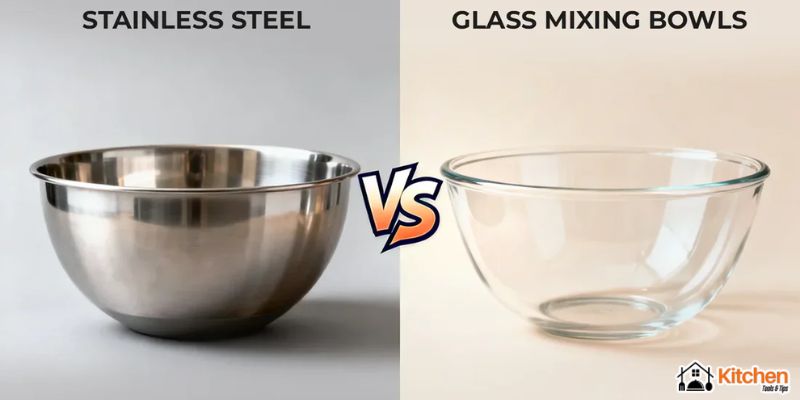
Stainless Steel vs Glass Mixing Bowls: Full Comparison
This is one of the most common questions I get from home cooks. You stand in the kitchen aisle. You see stainless steel bowl sets on one side and glass bowls on the other. Both look like good options. Both have their fans. So which one should you actually buy?
I have used both types extensively in my kitchen. I bake regularly. I cook for my family almost every day. I have tested both materials across dozens of tasks over the years. I know exactly where each one wins and where each one falls short.
In this article, I will give you a direct, honest comparison of stainless steel versus glass mixing bowls. I will cover every factor that matters for real kitchen use. By the end, you will know exactly which type fits your cooking style and your kitchen.
Let us get into it.
Why This Choice Actually Matters
Most people think any bowl will do. But the bowl you use affects more than you might expect.
The wrong material can slow down your baking. It can make certain cooking tasks harder. It can be the difference between perfectly whipped egg whites and a flat, failed meringue. It affects how you store food, how you clean up, and how long your cookware lasts.
Bowl logic is simple once you understand what each material does well. Match the right bowl to the right task and cooking becomes easier and more enjoyable. Choose the wrong one and you create unnecessary friction in the kitchen.
This comparison gives you the knowledge to make the right call.
What Stainless Steel Mixing Bowls Do Best
Stainless steel is my primary choice for everyday kitchen use. Here is why.
Temperature Control
Stainless steel conducts temperature extremely well and responds to changes quickly. This gives you real advantages in the kitchen.
For whipping egg whites, a chilled stainless steel bowl is the best tool available. I place my steel bowl in the freezer for fifteen minutes before I start. The cold bowl keeps the egg whites cold while I whip. Cold egg whites whip faster and hold their peaks better. The heavy metal holds the cold temperature throughout the entire process.
For yeast dough, the opposite matters. I warm my stainless steel bowl slightly before adding the dough for the first rise. Warm steel helps yeast activate and the dough rise faster. You have control over the environment inside the bowl. That control produces better baking results.
You cannot do either of these things as effectively with glass bowls. Glass is a poor conductor of temperature. It takes much longer to heat or cool and does not hold temperature changes as efficiently as steel.
Durability and Impact Resistance
Steel bowls handle the rough reality of a busy kitchen. They bounce when dropped. They resist denting under normal use. They do not chip or shatter.
I have dropped my steel mixing bowls several times over the years. Every time, the bowl survived without any damage. That cannot be said for glass bowls.
Glass bowls break. A single drop onto a hard floor usually ends with a shattered bowl and food all over the kitchen. Even when glass bowls survive a drop, they often chip on the rim. A chipped rim is a safety hazard and makes pouring messy and uncontrolled.
For busy kitchens, families with children, or anyone who moves fast while cooking, steel is simply safer and more practical.
Weight and Handling
A large stainless steel bowl is easy to lift and handle even when full. You can pour batter from a full large bowl with one hand while holding the pan steady with the other.
Large glass bowls are heavy. A large glass baking bowl filled with bread dough or a big batch of cookie dough becomes genuinely difficult to handle. Moving it from counter to counter, lifting it to pour, or carrying it to the table takes real effort.
For everyday cooking and baking, the lighter weight of steel saves energy and reduces the risk of dropping a full bowl.
Nesting and Storage
Stainless steel kitchen bowls nest perfectly inside each other. A full five-piece bowl set takes up the space of just the largest bowl in your cabinet.
Glass bowls nest too, but they are bulkier at every size. They take up more space individually and more space as a stacked set. In kitchens with limited cabinet space, this is a meaningful difference.
Steel nesting bowls are the most space-efficient bowl set option available. That efficiency matters in real kitchens where every inch of storage counts.
Cleaning
Steel bowls clean up quickly and easily. The non-porous surface releases food without scrubbing. A quick rinse and wipe with a soft cloth is often all it takes. Most steel bowl sets are also fully dishwasher safe.
Steel does not stain from acidic foods like tomatoes, berries, or citrus. It does not absorb odors from strong ingredients like garlic or onion. After washing, the bowl is completely neutral and ready for any task.
What Glass Mixing Bowls Do Best
Glass bowls have real advantages too. Here is where they genuinely shine.
Microwave Safe Functionality
This is the biggest practical advantage of glass over steel. Glass bowls are microwave safe. Steel is not.
If you frequently melt butter, soften chocolate, or reheat ingredients in a bowl, glass is the right tool for those specific tasks. You can measure, melt, and mix in the same glass bowl without dirtying a separate microwave-safe container.
This is a legitimate advantage that I account for in my own kitchen. I keep two glass bowls specifically for microwave tasks. They handle those jobs perfectly.
Visibility During Mixing
Glass bowls let you see what is happening inside the bowl from the outside and the bottom. This is useful when you are checking whether ingredients are fully combined or looking for streaks in a batter.
With a steel bowl, you can only see from the top. This is not a major disadvantage for most tasks, but it is a genuine benefit of glass that some cooks value highly.
Non-Reactive Surface for Acidic Foods
Glass is completely non-reactive with all food types. This matters when you are working with highly acidic ingredients like lemon juice, tomatoes, or vinegar-based dressings over very long marinating times.
Stainless steel is also very resistant to acidic foods and does not react under normal cooking conditions. But glass has zero reactivity under any circumstances. For very long marinating sessions, glass gives you an extra margin of reassurance.
Presentation and Serving
Glass bowls look elegant on the table. A large glass baking bowl filled with a colorful salad is a beautiful serving piece. Guests can see the contents clearly from every angle.
Steel bowls are functional and professional-looking. But they do not have the same visual appeal for table presentation that glass provides.
If you frequently serve food directly from the mixing bowl, glass wins on aesthetics every time.
Head-to-Head Comparison: Stainless Steel vs Glass
Here is a direct side-by-side breakdown across every major category:
Durability: Stainless steel wins clearly. Steel resists drops, dents, and daily wear. Glass chips and shatters. For a long-lasting bowl set, steel is the better investment in any kitchen.
Temperature handling: Stainless steel wins. Steel conducts and holds temperature changes that help with baking tasks like whipping egg whites and proofing yeast dough. Glass is a poor temperature conductor and responds slowly to changes.
Microwave safe: Glass wins completely. Steel cannot go in the microwave. If microwave use is important to your cooking routine, glass is essential for those tasks.
Weight: Stainless steel wins for larger sizes. Large glass baking bowls become very heavy when full. Large steel kitchen bowls remain manageable even with heavy batters or doughs inside.
Storage: Stainless steel wins. Steel nesting bowls stack cleanly and save more space than glass bowl sets of the same piece count.
Cleaning: Stainless steel wins slightly. Both materials clean easily, but steel is more resistant to staining from acidic or pigmented foods. Both are generally dishwasher safe.
Visibility: Glass wins. You can see ingredients through the sides and bottom of a glass bowl. Steel only gives you a top view.
Serving and presentation: Glass wins. Glass bowls look more elegant on the table and show food beautifully.
Price: Plastic bowls beat both for upfront cost. Between steel and glass, they are similarly priced at comparable quality levels. Glass tends to cost slightly more for premium sets.
Food safety: Both are excellent. Steel and glass are both non-reactive and food-safe. Neither leaches chemicals into food the way plastic bowls can, especially with heat or acidic contact.
What About Ceramic and Plastic Bowls?
Two other materials come up in this conversation. Here is where they fit.
Ceramic bowls are attractive and work well for serving. They are heavy, chip easily, and are not ideal for active mixing and baking tasks. They are better as serving pieces than as working kitchen bowls.
Plastic bowls are the cheapest option. They are lightweight and widely available. But plastic bowls stain easily, absorb odors, warp in the dishwasher, and degrade over time. They are not suitable for hot liquids or double boiler use. As a long-term bowl set investment, plastic bowls are the weakest choice of all four materials.
For real cooking and baking, the choice comes down to steel versus glass.
My Personal Setup and Recommendation
Here is how I actually use both materials in my own kitchen.
I use my stainless steel bowl set for the vast majority of cooking and baking tasks. Mixing batter, whipping egg whites, kneading yeast dough, marinating proteins, tossing salads, and prepping ingredients all happen in my steel bowls. The five-piece set handles everything.
I keep two glass bowls in my kitchen specifically for microwave tasks. Melting butter, softening cream cheese, and heating small amounts of liquid all go in the glass bowls. They also serve as serving pieces when the presentation matters.
This combination covers every task without compromise. You get the durability and temperature control of steel for active cooking and baking. You get the microwave functionality of glass for heating tasks and the visual appeal for serving.
For most home cooks, I recommend the same setup. Start with a quality stainless steel bowl set as your primary working set. Add one or two glass bowls for microwave use and serving. That combination gives you full coverage across every kitchen task.
Quick Decision Guide
Use this to decide which material fits your specific needs:
Choose stainless steel if you:
- Bake bread, cakes, or cookies regularly
- Need to whip egg whites or cream
- Work with yeast dough and need temperature control
- Want a durable, long-lasting bowl set
- Have limited storage space and need nesting bowls
- Cook for a family and need to move fast in the kitchen
Choose glass if you:
- Frequently melt or heat ingredients in the microwave
- Want to serve food directly from the mixing bowl
- Prefer to see ingredients through the sides of the bowl
- Work with highly acidic ingredients over long periods
Use both if you:
- Want full coverage for every possible kitchen task
- Bake regularly and also frequently use the microwave
- Cook for guests and want elegant serving options alongside functional cookware
Frequently Asked Questions
Which is better for baking: stainless steel or glass mixing bowls? Stainless steel is better for most baking tasks. It conducts temperature changes that help with whipping egg whites and proofing yeast dough. It is lighter and easier to handle when full of heavy batter or dough. For general baking, a stainless steel bowl set outperforms glass in almost every area except microwave use.
Can I use glass mixing bowls as baking bowls in the oven? Some glass bowls are oven safe, but you need to check the specific product. Standard glass mixing bowls are not always rated for oven temperatures. Always check the manufacturer’s guidance before placing any glass bowl in the oven. Stainless steel bowls are not oven safe either, but they work over a double boiler on the stovetop.
Are stainless steel mixing bowls safe for acidic foods? Yes. Stainless steel is highly resistant to acidic foods under normal cooking conditions. You can marinate with citrus, vinegar, and tomato without any reaction from the steel. For very long marinating times of multiple days, glass provides an extra margin of reassurance, but steel works fine for the vast majority of food tasks.