
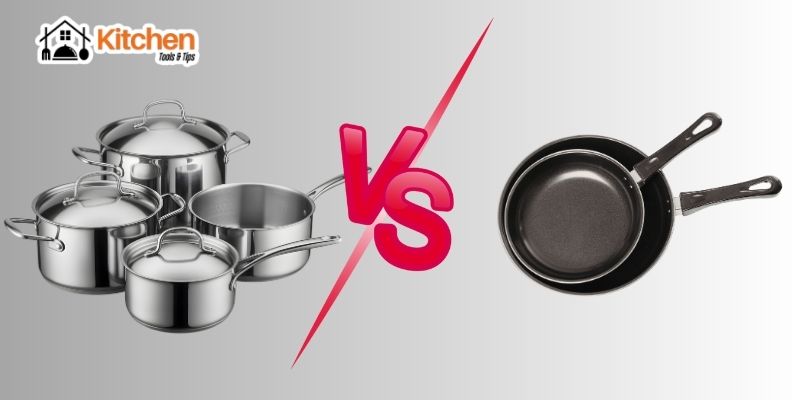
Choosing between stainless steel and nonstick cookware can feel overwhelming. Both types have loyal fans. Both work well in different situations.
This guide helps you pick the right cookware for your kitchen. You’ll learn what makes each type special. You’ll see when to use each one. And you’ll get answers to common questions.
Let’s dive in.
What Is Stainless Steel Cookware?
Stainless steel cookware is made from metal alloys. These alloys contain chromium and nickel. Some pans have an aluminum or copper core. This core helps heat spread evenly.
The surface is shiny and smooth. It doesn’t have a coating. The metal itself is what touches your food.
Key Features:
- Durable and long-lasting
- No chemical coatings
- Oven-safe at high temperatures
- Works on all stovetops
- Dishwasher-safe
Popular brands include All-Clad, Cuisinart, and Calphalon.
What Is Nonstick Cookware?
Nonstick cookware has a special coating. This coating stops food from sticking. Most nonstick pans use PTFE (polytetrafluoroethylene). You might know it as Teflon.
Some newer pans use ceramic coatings instead. These are marketed as safer alternatives.
Key Features:
- Food slides off easily
- Needs less oil or butter
- Easy to clean
- Lightweight design
- Great for delicate foods
Common brands are T-fal, Calphaon, and GreenPan.
Heat Performance and Cooking Control
Stainless Steel
Stainless steel gets very hot. It holds heat well. This makes it perfect for searing meat. You can get a beautiful brown crust.
The surface develops a fond. This is the brown bits that stick to the pan. Chefs use these bits to make delicious sauces.
You can use metal utensils without worry. The pan won’t scratch or chip.
Nonstick
Nonstick pans heat up quickly. But they don’t get as hot as stainless steel. The coating can break down at high temperatures.
Most nonstick pans should stay under 400-500°F. Going higher can damage the coating. It might even release fumes.
These pans work best for gentle cooking. Think eggs, pancakes, and fish.
Which Cookware Is Easier to Use?
For Beginners
Nonstick wins here. Food doesn’t stick. You use less oil. Cleanup takes minutes.
You can cook eggs without them sticking. You can flip pancakes with ease. Delicate fish fillets stay in one piece.
For Experienced Cooks
Stainless steel offers more control. You can develop complex flavors. You can deglaze the pan to make sauces.
It takes practice to master. You need to preheat the pan properly. You must use enough fat. But once you learn, the results are amazing.
Durability and Lifespan
Stainless Steel
These pans last decades. Some people inherit them from parents. They don’t chip or peel.
You can scrub them hard. You can use steel wool. The pan stays strong.
High-quality stainless steel cookware is an investment. But it pays off over time.
Nonstick
Nonstick coatings wear out. Most last 3-5 years with proper care. Some cheaper pans fail in months.
You must use soft utensils. Wood, silicone, and plastic are safe. Metal spatulas scratch the coating.
You need gentle cleaning. Harsh scrubbers damage the surface. Once the coating starts peeling, you need a new pan.
Health and Safety Concerns
Stainless Steel
This cookware is very safe. It’s inert. It doesn’t react with food. Nothing leaches into your meals.
Some people worry about nickel. If you have a nickel allergy, choose cookware with less nickel content.
Nonstick
Older nonstick pans contained PFOA. This chemical raised health concerns. Most manufacturers removed it by 2013.
Modern PTFE coatings are considered safe at normal cooking temperatures. But overheating can be risky. The coating may release harmful fumes.
Ceramic nonstick coatings are marketed as safer. They don’t contain PTFE or PFOA. But they still wear out quickly.
If your nonstick coating is scratched or peeling, replace the pan. Don’t cook with damaged nonstick surfaces.
Maintenance and Care
Stainless Steel
Cleaning: Use hot soapy water. For stuck-on food, use Bar Keeper’s Friend. You can also boil water with baking soda.
Storage: Stack them freely. They won’t scratch.
Seasoning: Not required, though some cooks season their pans.
Nonstick
Cleaning: Wash by hand with soft sponges. Avoid the dishwasher when possible.
Storage: Use pan protectors. Don’t stack without protection.
Seasoning: Some manufacturers recommend occasional seasoning with oil.
Best Uses for Each Type
Choose Stainless Steel For:
- Searing steaks and chops
- Browning chicken
- Making pan sauces
- Cooking acidic foods
- High-heat cooking
- Oven finishing
Choose Nonstick For:
- Cooking eggs
- Making omelets
- Flipping pancakes
- Cooking fish
- Low-fat cooking
- Quick meals
Cost Comparison
Stainless Steel
Entry-level sets start around $100-200. Mid-range options cost $300-600. Premium brands like All-Clad can exceed $1,000.
The high upfront cost makes sense. These pans last for life.
Nonstick
Budget pans cost $20-50. Quality options run $50-150. High-end ceramic nonstick can cost $200+.
You’ll replace them every few years. The total cost adds up over time.
Environmental Impact
Stainless Steel
These pans are eco-friendly. They last forever. You don’t throw them away. They can be recycled.
Nonstick
Nonstick pans end up in landfills. The coatings don’t break down easily. Manufacturing some coatings creates environmental concerns.
Replacing pans frequently increases waste.
The Verdict: Which Should You Buy?
The best choice depends on your needs.
Buy stainless steel if you:
- Want lifetime cookware
- Cook at high heat often
- Make sauces regularly
- Don’t mind a learning curve
- Value durability
Buy nonstick if you:
- Cook eggs and pancakes daily
- Want easy cleanup
- Prefer low-fat cooking
- Are new to cooking
- Have a tight budget now
The Smart Solution
Don’t choose just one. Most home cooks need both.
Start with a 10-inch or 12-inch stainless steel skillet. Add an 8-inch or 10-inch nonstick pan for eggs. This combination handles most cooking tasks.
As your skills grow, expand your collection. Add a stainless steel saucepan. Get a larger nonstick pan if needed.
Frequently Asked Questions
Q: Can I use metal utensils on stainless steel?
Yes. Stainless steel won’t scratch or damage from metal utensils. Use them freely.
Q: How do I prevent food from sticking to stainless steel?
Preheat the pan properly. Add enough fat. Let proteins develop a crust before flipping. The pan will release the food naturally.
Q: Are nonstick pans safe for birds?
No. Overheated nonstick pans release fumes toxic to birds. Keep birds out of the kitchen when cooking.
Q: Can stainless steel go in the oven?
Yes. Most stainless steel cookware is oven-safe to 500°F or higher. Check the manufacturer’s guidelines.
Q: How long do ceramic nonstick pans last?
Ceramic coatings typically last 1-3 years. They’re less durable than PTFE coatings.
Q: Can I put nonstick pans in the dishwasher?
Some manufacturers say yes. But hand washing extends the coating’s life. Dishwasher detergent is harsh.
Q: What’s the best oil for stainless steel cooking?
Use oils with high smoke points. Avocado oil, grapeseed oil, and refined coconut oil work well.
Q: Do I need to season stainless steel pans?
No. Unlike cast iron, stainless steel doesn’t require seasoning. Some cooks do it anyway for easier release.
Final Thoughts
Both stainless steel and nonstick cookware have their place. Stainless steel offers durability and versatility. Nonstick provides convenience and ease.
Think about what you cook most often. Consider your budget and cooking skills. Choose the cookware that fits your lifestyle.
Many professional chefs use both types. You can too.
Start with one good pan of each type. Learn how each works. Then expand your collection based on your needs.
Good cookware makes cooking more enjoyable. It helps you create better meals. Choose wisely and cook well.