
What Is a Honing Steel? Everything You Need to Know
You grab your kitchen knife. You start chopping. But the blade drags. It tears instead of slices. Sound familiar?
Most home cooks think their knife needs sharpening. But often, it just needs honing.
A honing steel can fix this in 30 seconds. Let me show you how.
What Is a Honing Steel?
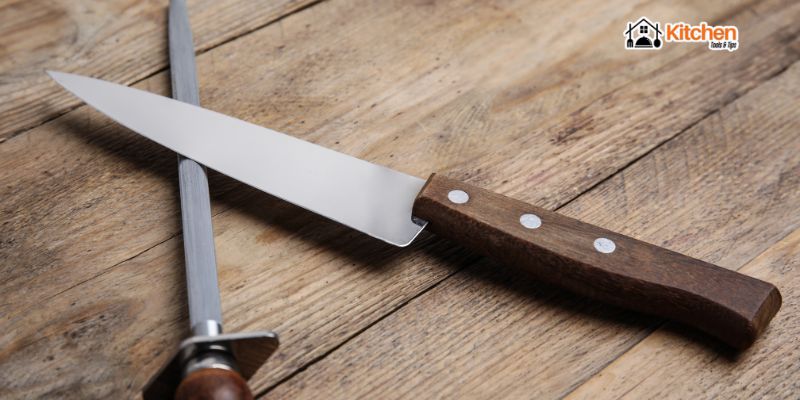
A honing steel is a long, rod-shaped tool. It is used to realign the edge of a knife blade. It does not remove metal. It simply straightens the blade’s edge back into place.
You may also hear it called a:
- Knife honing tool
- Honing rod
- Sharpening steel
- Knife steel
Despite the name “sharpening steel,” it does not sharpen in the true sense. It hones. There is a big difference — and we will get to that soon.
Most knife sets include a honing steel. Brands like Victorinox and Opinel often recommend one alongside their knives. That tells you how important it is.
How Does a Honing Steel Work?
Think of your knife edge like teeth on a comb. With use, those tiny teeth bend and fold over. The knife feels dull. But the metal is still there. It just needs to be straightened.
That is exactly what a honing steel does. It pushes those bent teeth back into alignment.
Here is the simple science:
- A knife edge is very thin
- Daily cutting causes the edge to roll or fold
- A honing rod guides the edge back to center
- The knife feels sharp again
No metal is removed. No grinding happens. It is pure realignment.
This is why chefs use a honing steel before almost every cooking session. It takes seconds. And it keeps performance at its peak.
Honing vs. Sharpening: What Is the Difference?
This confuses a lot of people. Let us clear it up fast.
Honing = realigning the blade edge (no metal removed)
Sharpening = grinding away metal to create a new edge
You hone often. You sharpen rarely.
Think of it this way:
- Hone your knife every time you cook
- Sharpen your knife only a few times a year
A sharpening stone or whetstone removes metal. It rebuilds the edge from scratch. A honing rod just maintains it.
If you only ever use a sharpening tool and never hone, your knife will wear down faster. If you only hone and never sharpen, eventually the edge will be too damaged to fix with honing alone.
Both tools work together. Neither replaces the other.
Types of Honing Steels
Not all honing rods are the same. Here are the main types:
1. Standard Steel Rod
This is the most common type. It is made from hardened steel. It has ridges or grooves along the surface. These ridges guide the blade back into alignment. It works well for most kitchen knives.
2. Ceramic Honing Rod
A ceramic honing rod is slightly more abrasive than a standard steel rod. It does a little light sharpening along with honing. It is great for knives that need more frequent maintenance. Many chefs prefer ceramic rod tools for harder steel blades.
3. Diamond Sharpening Rod
A diamond sharpening rod has a surface coated in tiny diamond particles. It is the most abrasive option. It removes a small amount of metal. It is better for more aggressive edge correction. Use it less often than a regular honing rod.
4. Smooth Steel Rod
This has no ridges. It is the gentlest option. It polishes the blade as it hones. It is ideal for very fine or delicate blades.
Quick comparison:
| Type | Abrasiveness | Best For |
|---|---|---|
| Standard steel | Low | Everyday use |
| Ceramic rod | Medium | Regular maintenance |
| Diamond rod | High | Damaged or dull edges |
| Smooth steel | Very low | Polishing fine blades |
How to Use a Honing Steel (Step-by-Step)
There are two main methods. Both work well. Pick the one that feels comfortable.
Method 1: Stationary Steel (Easiest for Beginners)
- Place the tip of the honing rod on a cutting board
- Hold the handle firmly with your non-dominant hand
- Hold your kitchen knife in your other hand
- Place the heel of the blade near the top of the rod
- Keep a 15 to 20 degree angle between blade and rod
- Sweep the blade downward and forward in one smooth motion
- Move from heel to tip of the knife
- Repeat 4 to 6 times per side
- Alternate sides each stroke
Method 2: Moving Steel (Professional Style)
- Hold the honing rod in your non-dominant hand, pointing outward
- Hold the knife in your dominant hand
- Sweep the blade across the rod from heel to tip
- Keep the same 15 to 20 degree angle
- Alternate sides with each stroke
- Do 4 to 6 strokes per side
Pro tip: The angle matters most. Too steep and you will dull the edge. Too shallow and you will miss the edge entirely. Fifteen to twenty degrees is the sweet spot for most kitchen knife blades.
If you use an Opinel knife or other European-style blade, 20 degrees is the standard angle. Japanese knives may need 10 to 15 degrees.
Best Honing Steels to Consider
Here are some trusted options used by home cooks and professionals:
Victorinox Fibrox Honing Steel — Victorinox makes reliable, affordable tools. Their honing steel is lightweight and easy to grip. It suits most sharpening knives tasks at home.
Opinel Sharpening Rod — Opinel is known for quality blades. Their Opinel sharpening tool matches well with their own knives. It is compact and travel-friendly.
Ceramic Rod Options — Ceramic honing rods from brands like Spyderco are highly rated. They work as both a honing and light sharpening tool.
Diamond Sharpening Rods — Great for quickly fixing a neglected blade. Use these sparingly as a sharpening tool since they do remove metal.
Common Mistakes to Avoid
Even simple tools can be misused. Watch out for these errors:
Using the wrong angle — The most common mistake. Always keep 15 to 20 degrees. Practice makes this feel natural.
Pressing too hard — Light pressure is all you need. Heavy pressure can damage the edge.
Honing a very dull knife — If the knife is truly dull, honing will not help much. Use a sharpening stone first. Then maintain it with a honing rod.
Never cleaning the rod — Metal and ceramic rods collect tiny metal particles. Wipe your rod clean after each use. Wash it occasionally with warm soapy water.
Using a honing rod as a sharpening tool — They are different. A honing rod does not replace a whetstone or sharpening stone for deeply dulled blades.
FAQ: What Is a Honing Steel?
Q: Is a honing steel the same as a sharpening steel? They are often used interchangeably. But technically, a honing steel realigns the edge. A sharpening steel (like a diamond rod) removes metal. Most rods sold in knife sets are honing steels.
Q: How often should I use a honing steel? Ideally, before every cooking session. It only takes 30 seconds. Regular honing means you rarely need to sharpen.
Q: Can I use a honing steel on any knife? Yes, but match the rod to the knife. Use a smooth or lightly ridged rod for hard Japanese steel. A standard rod works fine for most Western kitchen knife blades.
Q: Does a honing steel work on serrated knives? No. Serrated knives have a different edge geometry. They need a special serrated knife sharpener.
Q: Can I use a ceramic rod instead of a sharpening stone? A ceramic honing rod does remove a small amount of metal. It can substitute light sharpening. But for a very dull blade, you still need a proper sharpening stone.
Q: What angle should I use? Use 15 to 20 degrees for most Western knives. Use 10 to 15 degrees for Japanese knives like some Opinel styles or hard-steel chef knives.
Q: Is a diamond sharpening rod better than a ceramic rod? Not necessarily better just more aggressive. A diamond sharpening rod removes more metal. Use it when a knife needs more correction. Use a ceramic rod for regular upkeep.
Final Thoughts
A honing steel is one of the simplest tools in any kitchen. Yet it makes one of the biggest differences.
It keeps your knife performing like new. It extends the life of the blade. And it makes cooking safer and easier.
Here is a quick summary:
- A honing steel realigns the blade edge
- It does not remove metal like a sharpening stone does
- Use it before every cooking session
- Choose between steel, ceramic, or diamond based on your needs
- Keep the angle consistent at 15 to 20 degrees
- Trusted brands like Victorinox and Opinel both offer reliable options
You do not need to be a chef to use one. You just need 30 seconds and the right angle.
Start honing. Your knives will thank you.