
What Is a Pastry Cutter Used For?
Great pastry starts with one simple tool.
It is called a pastry cutter. It is small. It is cheap. And it changes everything about how you bake.
This tool cuts cold butter into flour. That one job creates the flaky, tender layers in pies, biscuits, and scones.
If you have ever eaten a perfect pie crust, a pastry cutter probably helped make it.
This guide will show you everything. What it is. What it does. How to use it. And how to pick the best one.
What Is a Pastry Cutter?
A pastry cutter is a small handheld baking tool. It has a handle on top. Below the handle, there are curved metal wires or blades.
You press it into butter and flour. It cuts the butter into tiny pieces. Those pieces mix into the flour evenly.
It also goes by other names:
- Dough blender
- Pie dough cutter
- Pastry blender
The key thing about this tool is simple. It keeps butter cold.
Cold butter is the secret to flaky pastry. Your hands are warm. They melt the butter fast. A pastry cutter never does that.
That is why bakers love it.
What Is a Pastry Cutter Used For?
The main job is to cut butter into flour. But it does more than that.
Here are all the ways you can use one:
1. Making Pie Crust
This is the number one use.
A pie dough cutter blends cold butter into flour. It breaks the butter into small, pea-sized pieces. During baking, those pieces melt. They create flaky layers.
No other tool does this better.
2. Making Biscuits and Scones
Biscuits and scones need the same method.
You cut cold butter into flour. You stop when it looks like rough crumbs. The pastry cutter handles this fast and evenly.
3. Making Crumble Toppings
Love fruit crumbles? You need this tool.
A pastry cutter blends butter, flour, and sugar into a crumbly topping. It takes less than two minutes.
4. Making Shortbread
Shortbread uses a lot of butter. A pastry cutter blends it into the flour smoothly. It does not overwork the dough. That keeps the shortbread soft and crumbly.
5. Mashing Soft Foods
A pastry cutter is a great masher too.
Use it to mash avocados for guacamole. Use it on bananas for banana bread. It breaks soft food down fast and evenly.
6. Breaking Up Ground Meat
Some cooks use a pastry cutter in the pan. It breaks up ground beef or turkey into small, even pieces while cooking.
It works surprisingly well.
How Does a Pastry Cutter Work?
It works through a simple press-and-rock motion.
Here is what happens:
You place cold butter cubes into your flour. You press the pastry cutter straight down. You rock it side to side. Then you lift it and press again.
Each press cuts the butter into smaller pieces. The flour coats each piece as you go.
You stop when the mix looks like coarse crumbs. Some pieces can be as big as small peas. That is perfect.
The whole thing takes two to three minutes. Fast. Simple. Easy.
Types of Pastry Cutters
There are a few different types. Each one works a little differently.
1. Wire Pastry Cutter
This is the most common type.
It has curved metal wires attached to a handle. The wires flex slightly when you press down. This makes it easy to cut through cold, firm butter.
Wire cutters are light and easy to clean. They are great for everyday home baking.
2. Blade Pastry Cutter
This one has stiff metal blades instead of wires.
The blades are stronger. They cut through very hard, frozen butter with ease. They last a long time and feel solid in your hand.
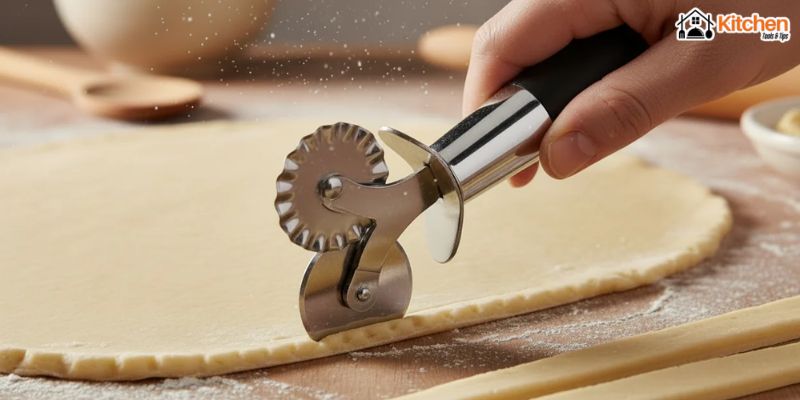
3. Pastry Wheel
A pastry wheel is a different kind of tool.
It has a small rolling disc on a handle. You roll it across dough to cut shapes and strips.
It does not blend fat into flour. It cuts dough into pieces. A pasta cutter wheel is a type of pastry wheel with a wavy edge. It makes fluted cuts for pasta and decorative pastry edges.
4. Dough Scraper
A dough scraper is a flat tool. You use it to lift and move dough on a counter.
Some models have a sharp edge. You can use that edge to cut dough into portions. It is not the same as a pastry blender, but it works well alongside one.
Benefits of Using a Pastry Cutter
Why should you use this tool instead of something else?
Here are the real reasons:
It keeps butter cold. This is the biggest one. Cold butter creates steam in the oven. That steam pushes layers apart. You get flaky pastry. Your hands warm the butter. A pastry cutter never does.
It gives you full control. You can see the texture as you work. You stop at the right moment. Machines can overwork dough in seconds. A pastry cutter never moves faster than you do.
It is fast. Two to three minutes. That is all it takes. It is one of the quickest hand tools in baking.
It is easy to clean. No moving parts. No motor. Just rinse under warm water and you are done.
It is cheap. A good pastry cutter costs $8 to $20. It lasts for years. It is one of the best value tools in any kitchen.
It needs no power. No outlet. No charging. No noise. Just pick it up and use it. Simple as that.
Pastry Cutter vs. Other Tools
Many people wonder if they really need a pastry cutter. Let us compare it to other tools.
Pastry Cutter vs. Food Processor
A food processor is fast. But it is risky for pastry.
It is very easy to over-process the dough. Over-processed dough turns tough. You also have more parts to wash.
A pastry cutter lets you feel the texture. You stop at the right moment every time.
Pastry Cutter vs. Mixer
A stand mixer can blend fat and flour. But like a food processor, it moves fast. You can ruin the dough without realizing it.
A pastry cutter is gentler. Gentle handling means flaky, tender pastry.
Pastry Cutter vs. Blender
Do not use a blender for pastry dough. It is not built for it.
The blender definition covers liquid blending — not dry, crumbly dough work. Thick dough will clog the blades. It can damage your blender too.
Pastry Cutter vs. Two Knives
Two butter knives crossed like scissors can work. Old recipes often suggest this.
But it is slow. It is tiring. And it is less effective. A pastry cutter does the same job in half the time with far less effort.
Pastry Cutter vs. Your Fingers
Using your fingers is a classic method. You rub cold butter into flour with your fingertips.
It works. But your hands warm the butter fast. You have to move very quickly.
A pastry cutter stays cool the whole time. No rush. No melting.
How to Use a Pastry Cutter — Step by Step
Follow these steps every time. You will get great results.
Step 1 — Chill your butter. Cut butter into small cubes. Put them in the freezer for 10 minutes. Very cold butter gives the best texture.
Step 2 — Add butter to flour. Put your dry ingredients in a wide, deep bowl. Add the cold butter cubes on top.
Step 3 — Press and rock. Hold the handle firmly. Press the cutter straight down into the butter and flour. Rock it slightly side to side. Lift it. Rotate the bowl a little. Press again.
Step 4 — Keep going. Repeat this motion. Work steadily. Each press breaks the butter into smaller pieces.
Step 5 — Check the texture. Stop when the mix looks like coarse crumbs. Pea-sized pieces are fine. Do not go smaller than that.
Step 6 — Clear the blades. Butter and flour build up on the wires. Tap the cutter on the bowl edge to shake it off. Use a finger to clear anything stuck.
Step 7 — Add your liquid. Once the fat is blended, add cold water. Mix gently with a fork. Stop as soon as it comes together. Do not overwork it from here.
Tips for the Best Results
Keep these tips in mind every time you bake:
- Use cold butter every time. Room-temperature butter will not create flaky layers.
- Work quickly. The faster you work, the colder the butter stays.
- Use a wide bowl. You need room to move the cutter freely.
- Stop at coarse crumbs. Over-blending makes tough, dense pastry.
- Chill your bowl too. Put it in the fridge for 10 minutes before you start.
- Clear the blades often. A clean cutter works much better than a clogged one.
- Use unsalted butter. It gives you full control over the salt in your recipe.
Pastry Cutter Substitutes
No pastry cutter? No problem.
Here are the best cutter substitutes you can use right now:
Two Butter Knives Hold one knife in each hand. Cross them through the butter and flour like scissors. It works. But it is slow and tiring.
A Fork A sturdy fork can press butter into flour. It works for small amounts. Expect more effort than a pastry cutter.
A Cheese Grater This is a great trick. Freeze the butter solid first. Then grate it straight into the flour using a box grater. The tiny butter shreds blend in easily.
A Food Processor Use the pulse button only. Short bursts. Stop the moment you reach a crumb texture. Do not let it run for more than a few seconds at a time.
Your Hands Work fast. Use your fingertips only. Rub the butter and flour together quickly. Palms are too warm — keep them away from the mix.
Each of these works in a pinch. But none of them gives you the same speed, control, and consistency as a real pastry cutter.
Frequently Asked Questions (FAQ)
Q1: What is a pastry cutter used for in baking?
It cuts cold butter into flour. This creates a crumb-like mix. During baking, the butter melts and forms flaky layers in pie crusts, biscuits, and scones.
Q2: Can I use a food processor instead?
Yes. But use the pulse button only. It is very easy to over-process the dough. Over-processing makes the pastry tough. A pastry cutter gives you much more control.
Q3: What is the difference between a pastry cutter and a dough scraper?
A pastry cutter blends fat into flour. A dough scraper lifts and portions dough. They do different jobs. Many bakers use both tools together.
Q4: What does a pastry wheel do?
A pastry wheel cuts dough into strips or shapes. You roll it across the dough. It does not blend fat into flour. It is used for lattice pie tops, pasta strips, and decorative pastry edges.
Q5: How do I clean a pastry cutter?
Rinse it under warm water right after use. Use a small brush to remove dough from between the wires. Most pastry cutters are not dishwasher-safe. Hand-wash and dry fully before storing.
Q6: Can I use a pastry cutter for things other than baking?
Yes. Mash avocados, bananas, or boiled potatoes with it. Some cooks also use it to break up ground meat in a pan while cooking.