
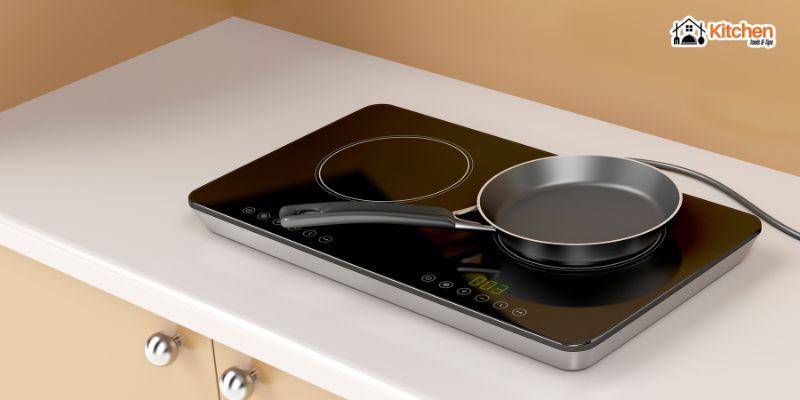
An induction cooktop is a modern cooking appliance that uses electromagnetic energy to heat your pots and pans directly. Unlike gas or electric stoves, it doesn’t create flames or hot coils. Instead, it generates a magnetic field that turns your cookware into the heat source.
This technology has been around since the 1900s. But it only became popular in home kitchens over the past 20 years. Today, millions of people worldwide use induction cooktops in their homes.
How Does an Induction Cooktop Work?
The science behind induction cooking is simple yet clever.
When you turn on an induction burner, an electric current flows through a copper coil under the glass surface. This creates an alternating magnetic field. When you place a magnetic pot or pan on top, the field passes through it and creates tiny electric currents inside the metal.
These currents produce heat through a process called resistance. Your pan heats up fast. But the cooktop surface stays relatively cool.
Think of it like this: Your cookware becomes the heating element. The cooktop just delivers the energy.
This is why you can touch the cooktop surface right next to a hot pan and barely feel warmth. The heat only exists where the magnetic cookware sits.
Why Induction Cooktops Need Special Cookware
Not all pots and pans work with induction cooking.
You need cookware made from magnetic materials. Cast iron and stainless steel work perfectly. Aluminum, copper, and glass don’t work unless they have a magnetic base.
Here’s a simple test: Hold a magnet to the bottom of your pan. If it sticks, you can use it on an induction cooktop.
Many cookware manufacturers now label their products as “induction compatible” or “induction ready.” Look for this marking when shopping.
Major Benefits of Induction Cooktops
Speed That Saves Time
Induction cooktops heat up incredibly fast. They can boil water in nearly half the time of gas or electric stoves.
A typical induction burner can boil 6 cups of water in about 3 minutes. A gas stove takes 8 minutes. An electric coil takes 10 minutes or more.
This speed comes from direct energy transfer. No heat escapes into the air around your pan.
Safety Features You’ll Love
Induction cooktops are the safest option for home cooking.
The surface doesn’t get hot on its own. It only warms up from contact with your hot cookware. This means fewer burn risks.
Many models have automatic shut-off features. They turn off when you remove the pan. Some detect spills and power down immediately.
There’s no open flame. No gas leaks to worry about. No red-hot coils that stay dangerous for minutes after you turn them off.
Families with young children especially appreciate these safety advantages.
Energy Efficiency That Lowers Bills
Induction cooking wastes very little energy.
About 85% to 90% of the energy goes directly into your food. Gas stoves only achieve 40% efficiency. Electric coil stoves reach about 65% to 70%.
This efficiency means lower electricity bills. It also keeps your kitchen cooler during cooking. Less wasted heat means your air conditioner doesn’t work as hard.
Precise Temperature Control
Induction gives you instant control over heat levels.
When you adjust the temperature, the change happens immediately. This makes it perfect for delicate tasks like melting chocolate or simmering sauces.
Professional chefs love this responsiveness. It gives them gas-stove-level control with even better precision.
Induction vs. Gas vs. Electric: The Real Differences
Speed: Induction wins. It boils water fastest and heats pans almost instantly.
Control: Induction and gas tie. Both respond quickly to temperature changes. Electric coils lag behind.
Safety: Induction takes the lead. No flames, no hot surfaces, minimal burn risk.
Energy Use: Induction uses less energy than both gas and electric options.
Cost: Gas is usually cheapest to operate. But induction’s efficiency can make up the difference over time.
Cookware: Gas and electric work with any pots and pans. Induction requires magnetic cookware.
Installation: Gas needs a gas line. Induction needs adequate electrical service. Some homes need electrical upgrades.
What to Consider Before Buying
Check Your Cookware
Review your current pots and pans. Test them with a magnet. You might need to buy new cookware.
Good induction-compatible sets are available at all price points. You don’t need to spend a fortune.
Electrical Requirements
Most induction cooktops need 240-volt electrical service. Portable single-burner units can use standard 120-volt outlets.
Full-size cooktops may require 30 to 50 amps of power. Check your home’s electrical panel. You might need an electrician to upgrade your wiring.
Surface Care
The glass-ceramic surface is durable. But it can scratch or crack if treated roughly.
Avoid sliding heavy pots across the surface. Clean up spills promptly with soft cloths. Don’t use abrasive cleaners.
Noise Levels
Some induction cooktops make a humming or buzzing sound. This comes from the electromagnetic field and cooling fans.
The noise is usually quiet. But it’s worth testing models in stores if you’re sensitive to sound.
Cost Considerations
Induction cooktops typically cost more upfront than gas or electric models. Prices range from $1,000 to $3,000 for built-in units.
Portable single-burner models start around $50 to $100. These let you test induction cooking before committing to a full installation.
Frequently Asked Questions
Can I use my old pots and pans on an induction cooktop?
Only if they’re magnetic. Cast iron and most stainless steel work fine. Test with a magnet to be sure.
Does induction cooking use a lot of electricity?
No. Induction is very efficient. It uses less total energy than electric coil stoves and wastes less heat than gas.
Is induction cooking safe for people with pacemakers?
Most modern pacemakers are shielded against electromagnetic interference. But talk to your doctor if you have concerns. Keep a reasonable distance while cooking.
How long do induction cooktops last?
With proper care, expect 10 to 15 years or more. The solid-state components are durable. There are no parts that burn out like electric coils.
Can induction cooktops crack?
Yes, like any glass surface. Don’t drop heavy objects on them. The glass is tempered and strong, but not indestructible.
Do restaurants use induction cooktops?
Yes. Many professional kitchens now use induction. It offers precise control and keeps kitchens cooler.
Is an Induction Cooktop Right for You?
Induction cooktops excel in speed, safety, and efficiency. They’re perfect if you want precise temperature control and modern kitchen technology.
Consider induction if you have young children, want to reduce energy use, or love cooking techniques that need exact heat control.
The main trade-offs are upfront cost and cookware compatibility. But many users find the benefits far outweigh these concerns.
As more people discover induction cooking, prices continue to drop. The technology keeps improving. Now is a great time to make the switch.
Your cooking experience will transform. Food cooks faster. Your kitchen stays cooler. And you’ll enjoy knowing you’re using one of the most efficient cooking methods available.